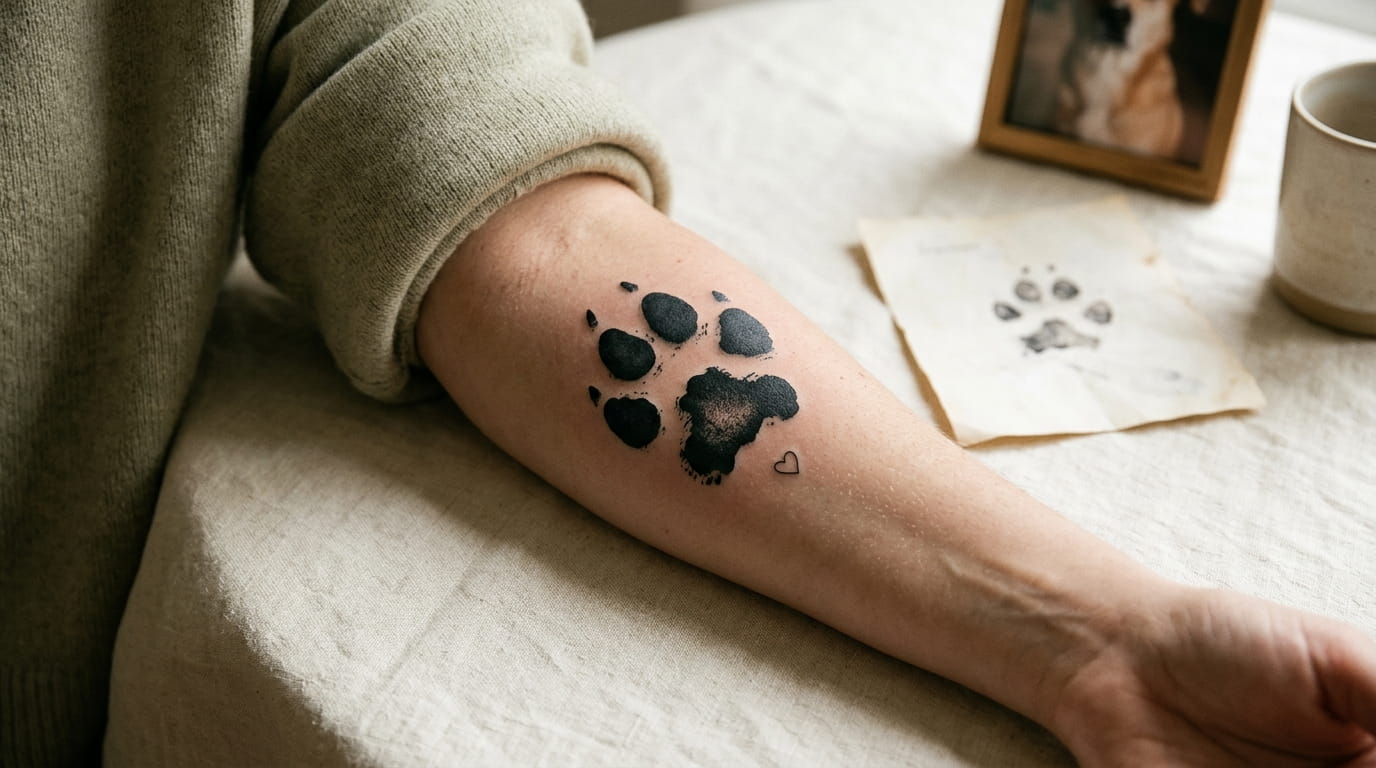
The best part of a pet’s paw is also the hardest to copy, because no two are the same. The pads sit a little crooked, one toe leans, and there is a nick on the left side from some old adventure.
Most people hand an artist a cute clip art paw and hope for the best. It looks fine, but it could belong to any dog or cat. It does not look like yours. A nose print has the same problem, since a generic swirl says nothing about the animal you actually miss or adore.
A real pet paw print tattoo starts with the actual print. The shape, the spacing, and even the wobble come straight from your pet, which makes the finished tattoo something nobody else can have.
Below are 12 ways to take a clean print, turn it into a tattoo that matches it, and add the small details that make it personal. Some ideas are about the print itself and others are about where it goes and what sits beside it. Start with the first one, because everything else depends on a good print.
1. Take the Real Print First: Pet Safe Ink, Soft Paper, and a Calm Moment
Do this before you call a single artist.
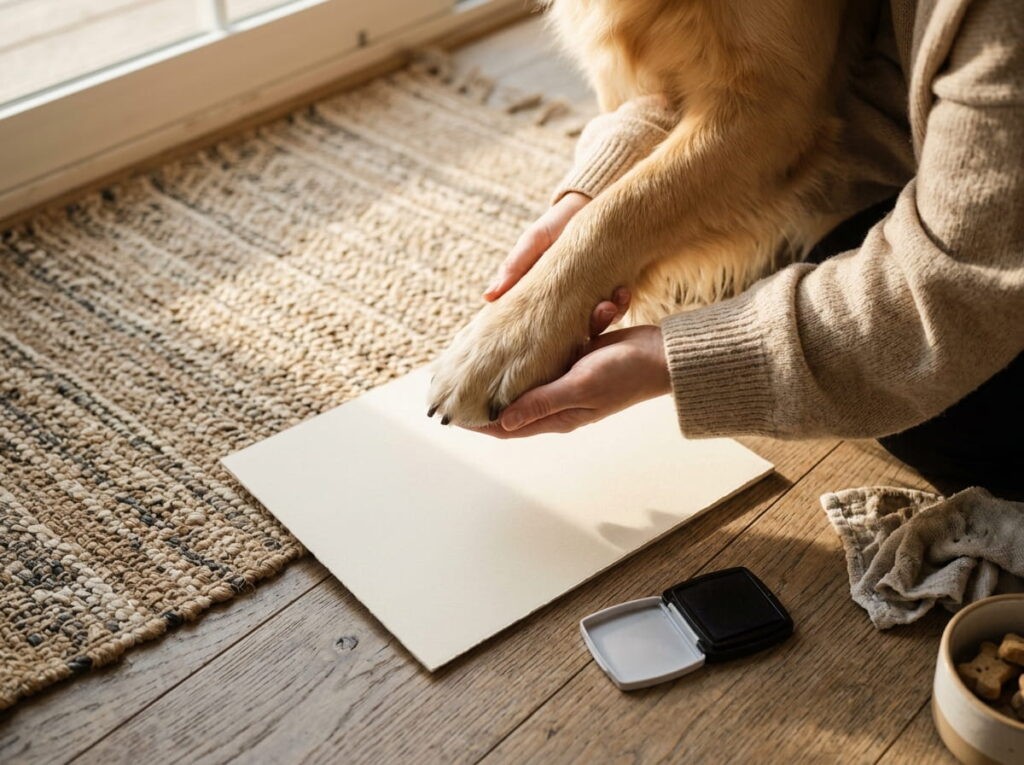
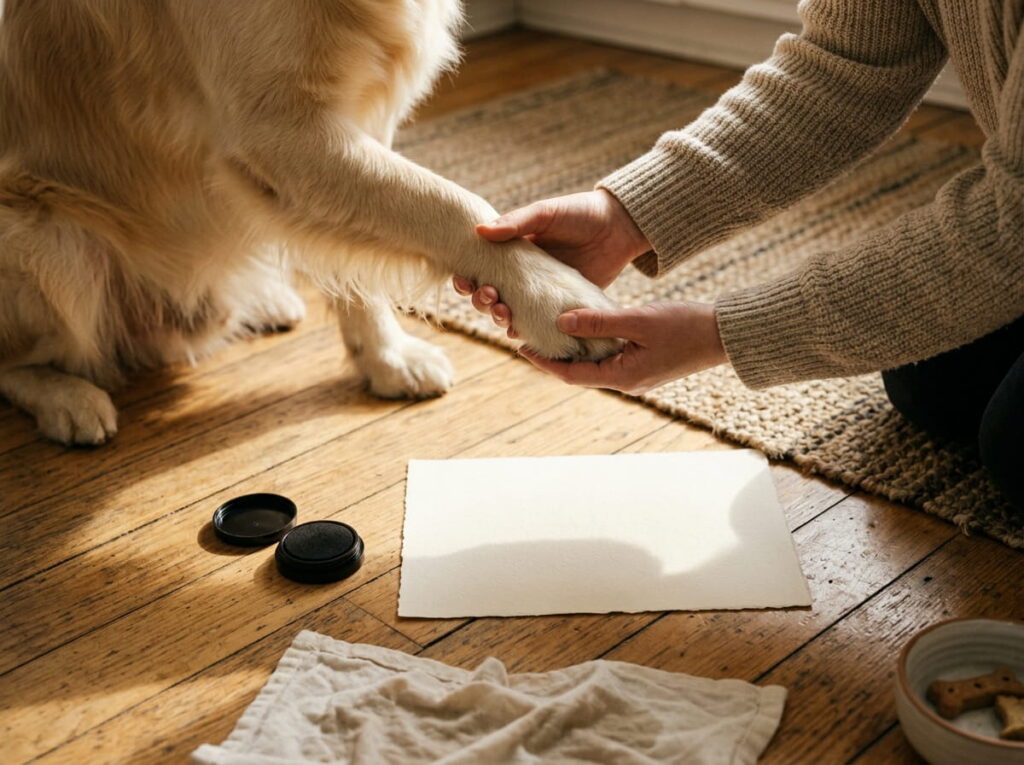
A clean print is the base for every idea in this list, so it is worth going slowly. Use an ink pad made for pets, soft paper, and a quiet moment after a walk when your pet is relaxed. Never force a paw down. If your pet pulls away, stop and try again tomorrow. Take several prints, because the first one is almost always smudged.
Nose prints are trickier. Ask your vet or groomer for a safe way to take one.
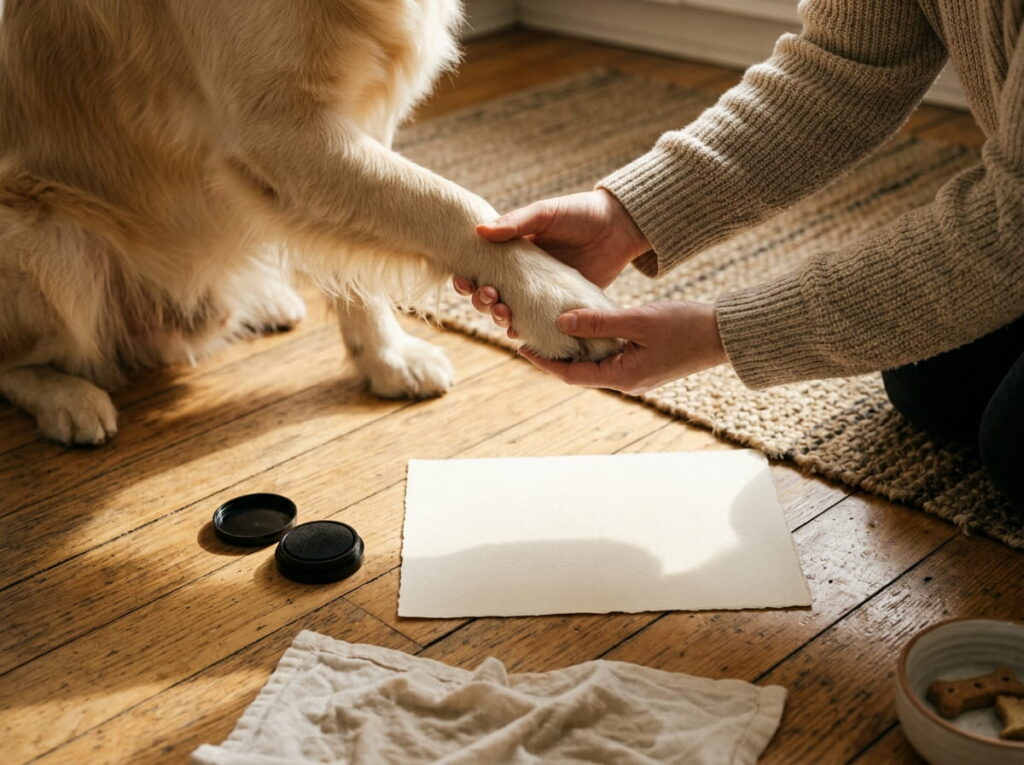
Press the paw gently into the pet safe ink pad and hold for just a second.
Press the paw onto soft paper, or lift the paper up to the paw if your pet dislikes being held down.
Lift straight up without sliding, then wipe the paw clean with a damp cloth right away.
2. Trace the Actual Print So the Tattoo Matches Your Pet’s Own Paw
The most personal version is the one your artist traces from the real print, wobbles and all. Ask them to work from a scan instead of redrawing it from scratch. A neat redraw looks tidy but loses the crooked toe you would recognize anywhere.
When you talk to your artist, ask them to keep:
- The original proportions of the pads and toes
- The real spacing between each toe
- Any notch or uneven edge that makes it yours
Exact traces suit larger spots best, since very fine details can blur over the years.
3. Paw Print or Nose Print: Which One Fits Your Story
Paw prints are what most people picture, and they read at a glance. A nose print is less common. It looks like a pattern of tiny ridges and dots, closer to abstract art than to a pet icon.
People often choose a nose print when the nose was their pet’s signature feature, like a heart shaped spot or a permanent smudge from pressing against the window.
Quick way to decide:
- Pick a paw if you want something instantly recognizable
- Pick a nose if you want a design only you will understand
| Paw print | Nose print |
|---|---|
| Familiar pads and toes | Ridges and dots, more abstract |
| Holds up well at small sizes | Needs more room to show the pattern |
| Easier to take at home | Harder to take cleanly, ask your vet |
4. Place the Print Where Its Real Size Still Reads Clearly
Here is a simple rule. If you cannot count four toes and a pad, the print is too small.
That rule helps you choose a spot before you fall for a tiny one. Placement ideas that work with real prints:
- Inner forearm, a flat area that shows fine detail
- Calf or outer thigh, with room for a larger exact trace
- Behind the shoulder, easy to show or hide
- Ankle, popular but small, and shoes can rub it while it heals
Bring your print to the consult and hold it against each spot.
5. Frame the Original Print Beside Your Tattoo for a Matching Pair
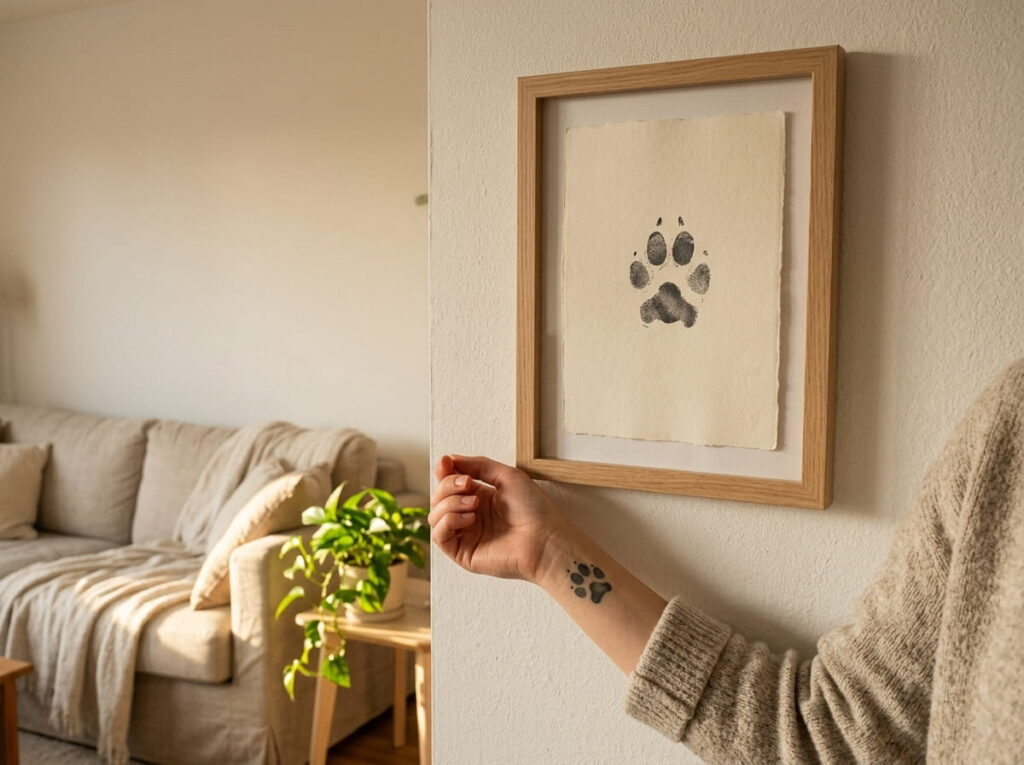
Somewhere in your home there is a wall that could hold the real thing. Press the original print onto thick paper, add a short caption like their name and the year, and frame it plain.
Then the tattoo and the print tell the same story from two places, one on your skin and one on your wall.
💡 Quick Tip
Once your tattoo has healed, photograph it, print the photo at the same size as the original paw print, and frame the two side by side. Seeing both at one scale makes the match obvious.
6. Tuck Their Name or Initial Inside the Pads
Look at the large center pad on a paw print. It is a good-sized blank space, and most people leave it empty.
A single initial fits there, and so does a short name in tiny script. The print stays the star and the letters ride quietly inside it. Use thin, simple lettering. Fancy script gets lost in a small area and can blur as the tattoo ages.
If the name is long, use initials or put it just below the print instead.
A paw print with a blank center pad. Nice, but nothing says whose paw it is.
The same print with a thin initial inside the main pad. Anyone who knows the pet gets it right away.
7. Add Their Dates in Tiny Numerals Under the Print
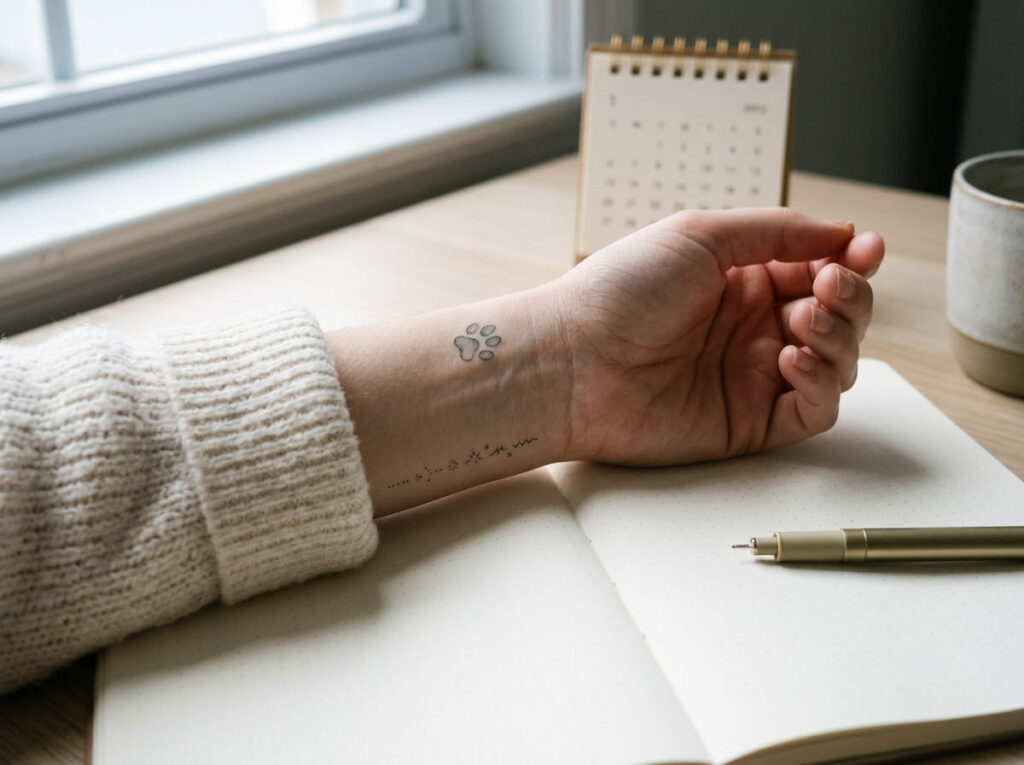
Dates are the detail people regret most when they get them wrong. They end up too big, too bold, or in a font that fights the print.
Keep the numerals small and plain, sitting under the paw like a caption. Choose a format you will still like in ten years, such as a year only, a birth and passing year pair, or a single adoption date. Roman numerals look neat but are harder to read at a glance, so think about who needs to read it.
Decide these before the consult
8. Clean Up the Smudges, Keep the Shape
A clean print is not the same as a perfect print.
Many people worry their print is too messy to use. It usually is not. Ink bleeds, paper wrinkles, and a paw moves a little on the way up. Your artist can sharpen those edges without changing what makes the print yours.
Show them your favorite print and your messiest print, and ask which one they would trace. The right artist will tell you which smudges are just ink and which are the real shape of the paw.
Ask the artist to sharpen blurred edges.
Keep any odd toe angle or notch you recognize.
Smooth every toe into a matching oval.
Swap in clip art because the print looks rough.
9. Use a Vet Print or Clay Impression for a Pet You Have Lost
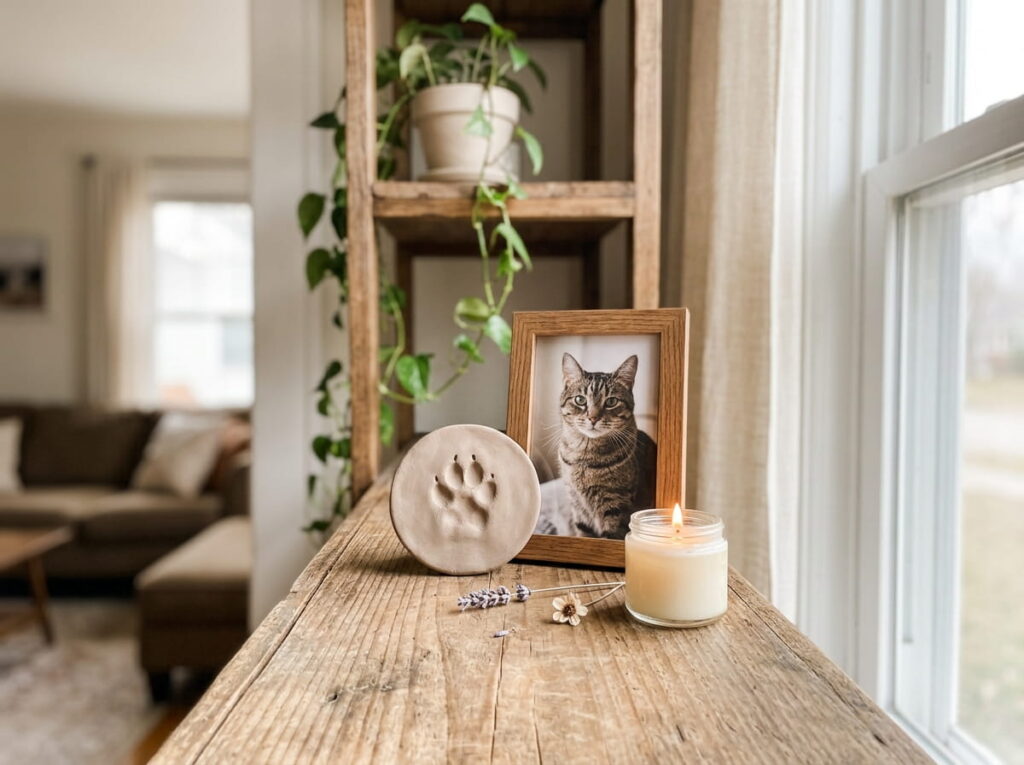
Many people only think about a tattoo after their pet is gone, and then there is no fresh print to take.
You may still have options. Some vet clinics take a clay or ink paw impression during end of life care, and some keep copies of past ones. A groomer, an old craft project, or a keepsake box might also hold a print you forgot about. Call and ask gently. Staff hear this question more often than you would think.
If you find nothing, a photo of the paw can still guide your artist.
⚠️ Watch Out
Old ink fades and paper yellows. Scan or photograph the original before you bring it anywhere, and keep the real one safe at home.
10. Blend the Print With a Small Heart, Flower, or Bone
A paw print on its own is simple. Add one small companion and it starts to tell more of the story.
The trick is restraint. One symbol, kept small, so the print still leads. Place it where the paw has natural breathing room, such as beside the toes or just under the main pad. Three symbols crowd the design, and a print covered in extras stops looking like a real paw.
Rotation check: item 10 used quick glance cards, so item 11 goes numbered steps (light) and item 12 goes key takeaway banner (rich). That brings the full plan to 6 rich and 6 lighter visuals, with no two in a row matching. Palette is unchanged.
11. Show Your Artist the Scan, a Photo, and a Size Note
Walking in with just the paper print leaves a lot to chance. Paper curls, colors shift, and an artist can only guess how big you want it.
Bring three things instead:
- A flat, high quality scan of the print
- A photo of the real paw, so they can see the pad shapes and any fur
- A short note with the size and spot you have in mind
Send them ahead of time if you can. That gives your artist a day or two to sketch, and you a head start on spotting anything that needs a change.
Scan the print flat at the highest setting, with no folds or shadows across it.
Photograph the paw next to a coin so your artist can judge the real size.
Write down the spot, the rough size, and any words or dates you want added.
Ask for a stencil test and compare it to the original print before you say yes.
12. Say One Line About Why This Pet Matters, and Let It Shape the Design
Before the consult, finish this sentence: “This tattoo is for the pet who…”
The answer steers every choice. A pet who followed you from room to room might get a print that points toward the heart. A pet who was a rescue could get a date and a tiny flower. A pet with a famous crooked toe could get a bigger, exact trace so nobody misses it.
You do not need to share the sentence with anyone. It just keeps the design from drifting toward whatever looks nicest on a mood board.
The best paw print tattoo comes from the real print and one honest reason. Keep the shape true, add one meaningful detail, and stop there.
Conclusion
A pet paw print tattoo works best when it still looks like your pet. The crooked toe, the uneven pads, and the odd smudge are what make it recognizable, so protect them. Take a clean print, bring a scan and a photo to the consult, and keep the extras small. One name, one date, or one tiny symbol is plenty.
If the print came from last week or from an old keepsake box, it carries something no design site can sell you. Give it room on your skin, and let your artist trace what is already there.
Before you book
Leave a Reply