You want a way to keep your dog close that does not need explaining. Something small enough for an ordinary day, and clear enough that you feel them there when you glance down.
The hard part is that most lists lean on the same three designs, and grief makes choosing feel heavy. You are not just picking a picture. You are picking how you will remember a warm head on your lap and the sound of nails on the kitchen floor.
These dog memorial tattoo ideas range from a single paw print to a soft line portrait, and each one is built to feel personal instead of generic. Some are tiny and easy to cover. Some are bolder and made to be seen. Many use something you already have, like a collar tag, a favorite photo, or a paw print on paper.
Read slowly and save the ones that make your chest go quiet. There is no deadline. The right design usually keeps coming back to you.
1. A Single Paw Print Placed Where You Can See It Every Day
Where it sits matters as much as what it is.
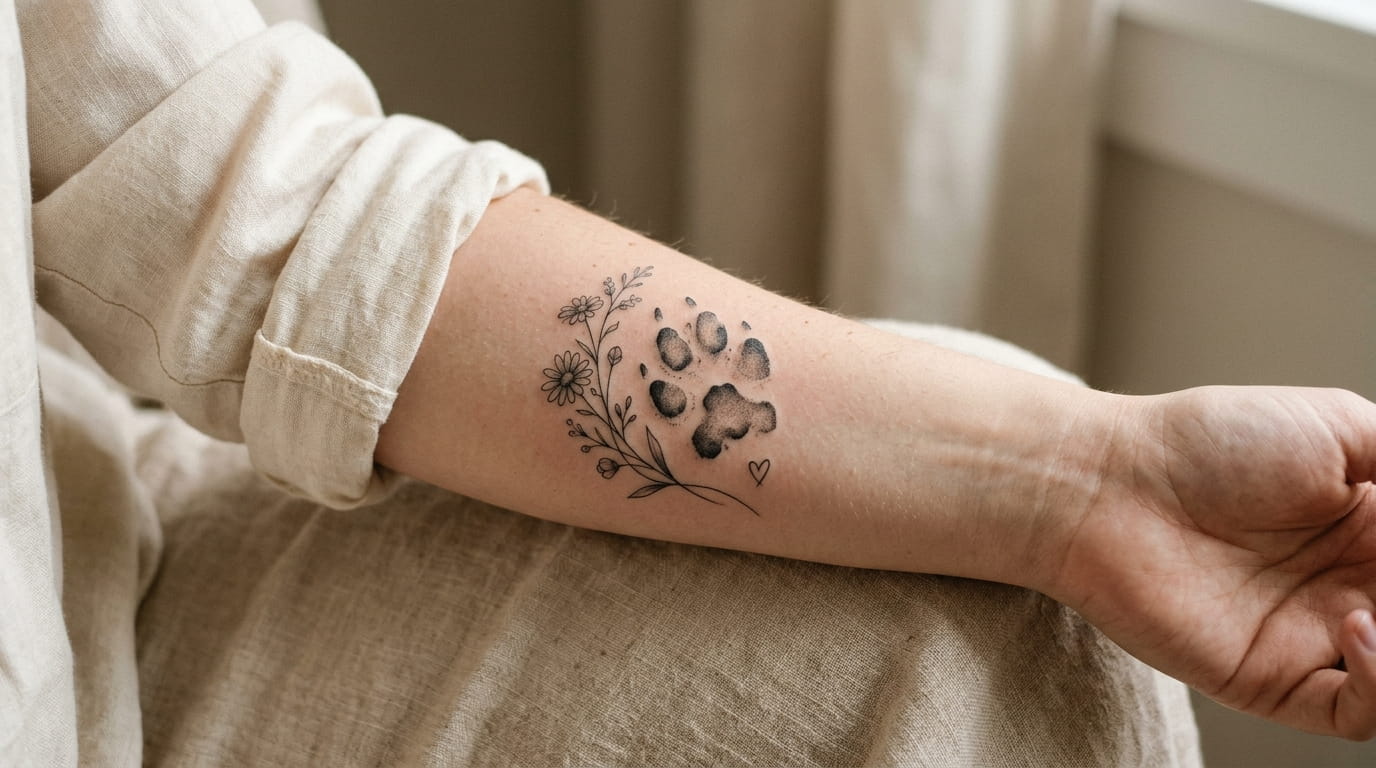
A paw print is the simplest tribute, and placement gives it meaning. On your inner wrist, you see it while you type, drive, or hold a mug. Behind the ankle it stays private. Near the collarbone it feels close to your heart without announcing itself.
Ask yourself three things before you choose:
- Do I want to see it every day, or only sometimes?
- Do I need to cover it for work?
- Will I want to add more to it later?
2. Use Your Dog’s Real Paw Print Pressed From an Ink Pad
Real prints carry quirks no stock design can match. One pad sits a little crooked, one toe spreads wider, and the whole shape is unmistakably theirs.
If your dog is still with you, you can make the print at home in a few minutes. If they have already passed, call your vet or the place that handled their cremation. Many make a clay or ink impression and keep it on file.
Hand the clearest print to your tattoo artist and ask them to copy it as closely as they can.
Buy a pet safe, non toxic ink pad and a few sheets of plain paper.
Press the paw onto the pad, then onto the paper, and hold still for a few seconds. Treats help.
Make five or six prints, pick the cleanest, and photograph it flat in bright daylight.
3. Ink Their Name in Your Own Handwriting or Theirs

Your dog’s name is probably written somewhere in your home already. It is on a bowl, a vet card, a leash tag that has gone dull from years of wear.
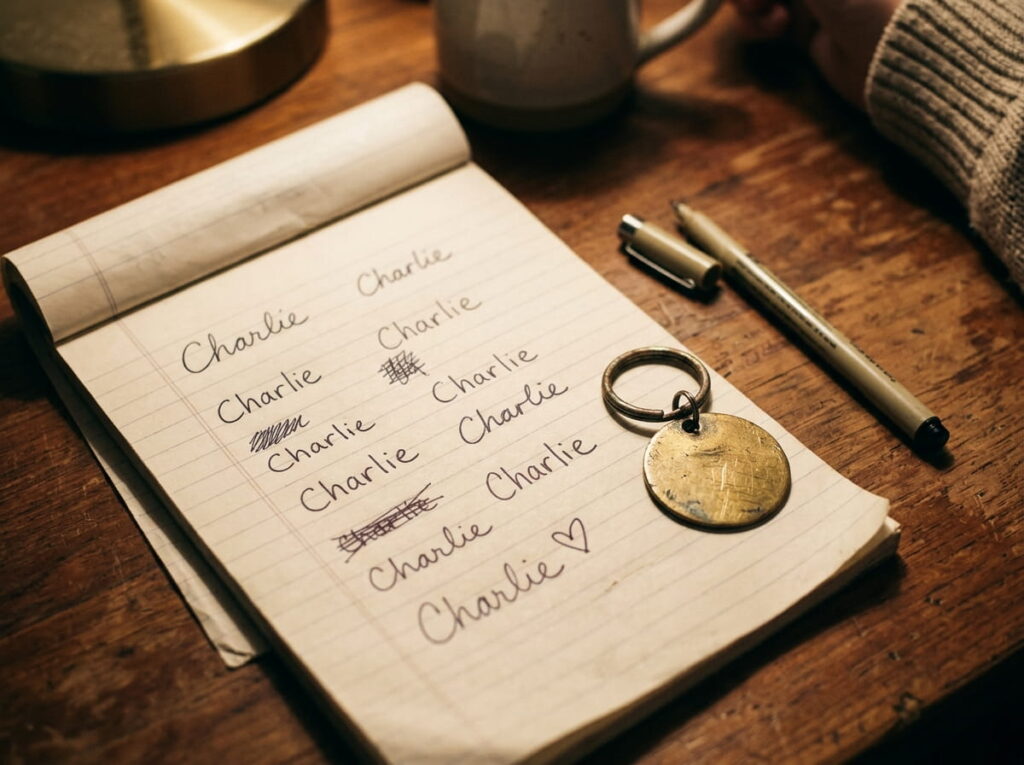
A name tattoo feels more personal when it is not set in a computer font. You can use your own handwriting, or find a note from a family member who loved them too. Some people use a signature on a sympathy card from the vet.
Write the name a few times on paper and choose the version that looks most like your voice saying it.
💡 Quick Tip
Very thin, small handwriting can blur as the years pass. Ask your artist to make the strokes a touch thicker than your pen lines, and keep the letters a little farther apart than feels natural on paper.
4. A Soft Line Portrait Drawn From Your Favorite Photo
Most phone photos make poor tattoo references. They have busy backgrounds, harsh shadows, and a dog who looked away at the wrong second.
A line portrait solves this by keeping only what makes the face theirs: the eyes, the shape of the nose, the edge of one ear. Everything else drops away. The result reads as gentle and light, not heavy.
Look for a photo with these three things:
- Eyes that are clear and facing you
- Even daylight with no strong shadows
- A natural expression, not a posed one
A blurry snapshot from the couch, with fur blending into the blanket and half the face in shadow.
A clean outline of the eyes, nose, and ear, drawn with a few unbroken lines and plenty of open skin around it.
5. Pair a Small Heart With Their Birth and Passing Dates
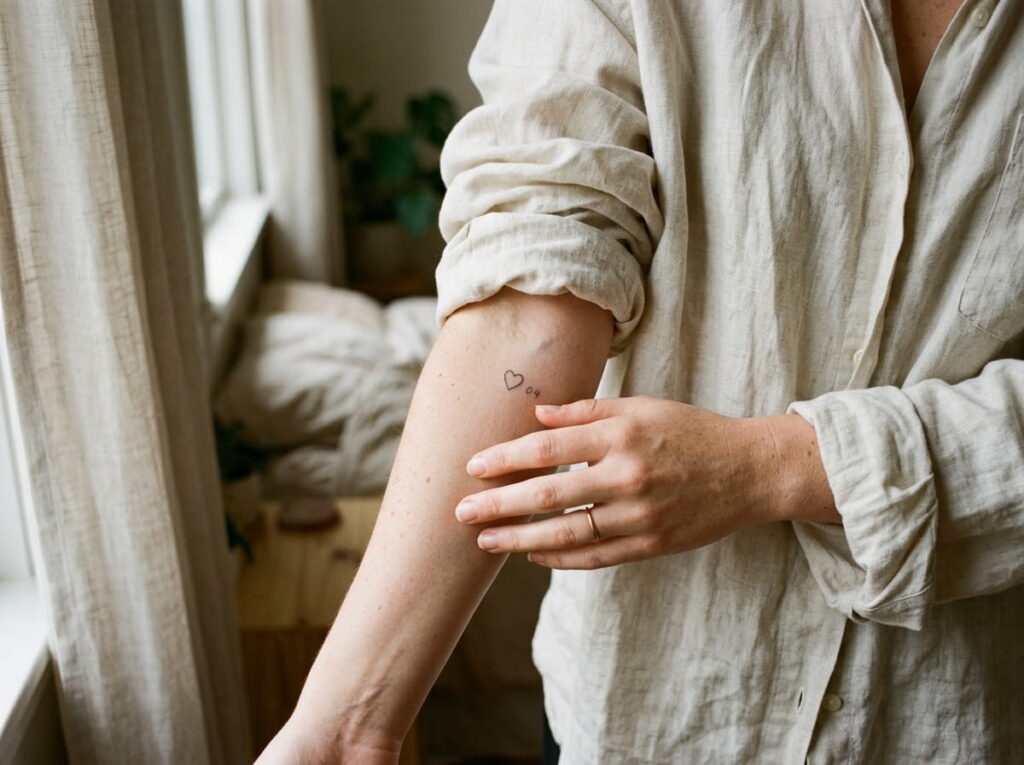
Dates can feel cold or comforting, depending on how you write them.
Numbers in a straight line look like a record. Tucked beside a small heart, or stacked beneath a paw print, they turn into something softer. If the full dates feel like too much, use only the years. Some people keep just the day they brought their dog home.
Think about how you will feel reading it on a hard day, and choose the version that helps.
| Roman numerals | Plain numbers |
|---|---|
| Look: classic and quiet | Look: simple and direct |
| Takes more space, since the characters run longer | Fits small spots like a finger or behind the ear |
| Others may need a second to read it | Anyone can read it at a glance |
6. Hide the Tribute Behind the Ear for Something Quiet
Not every memorial needs an audience.
The spot behind your ear is small, private, and easy to hide with your hair. It suits a tiny paw, a single heart, or the first letter of their name. Only you and the people who lean in close will ever see it.
Keep the design under an inch tall. Skin there is thin, and anything busier than a few clean lines can blur over time. It also tends to feel more tender during the session than larger areas, so plan for a short appointment.
7. Turn Their Collar Tag Into a Tiny Tattoo
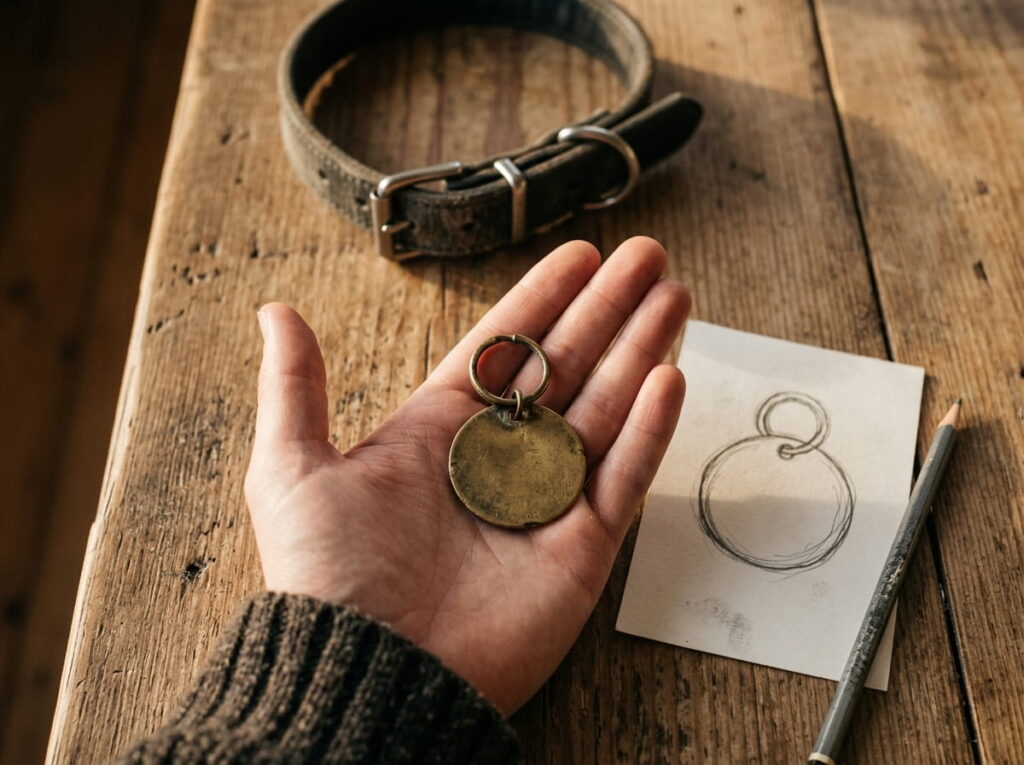
That little metal tag jingled every time they shook off a nap. It is one of the few objects that sounds like them.
A tag tattoo can be a simple round or bone shape with their name inside, and it carries a lot of feeling for how little ink it takes. If you still have the real tag, keep it close and show it to your artist. The dents and wear are part of what makes it theirs.
Bring a few things to the consult so the artist can match the details.
What to bring to the consult
8. Tuck Your Dog’s Breed Silhouette Into a Wrist or Ankle Design
A silhouette says “this is my dog” in a single glance, and it works especially well for breeds with a clear shape. Dachshunds, corgis, greyhounds, and pugs each have a profile you would know in the dark.
Keep it solid and simple. Fine interior detail rarely survives at small sizes, so let the outline do the talking.
Mixed breeds work too. Ask your artist to build the shape from a side photo where the ears, tail, and legs are all visible.
Use a side photo with the full body showing.
Keep the shape bold and solid.
Leave a little breathing room around it.
Packing in fur texture and tiny whiskers.
Using a photo taken from above.
Shrinking it so small the legs merge together.
9. Frame a Paw Print With Their Birth Flower
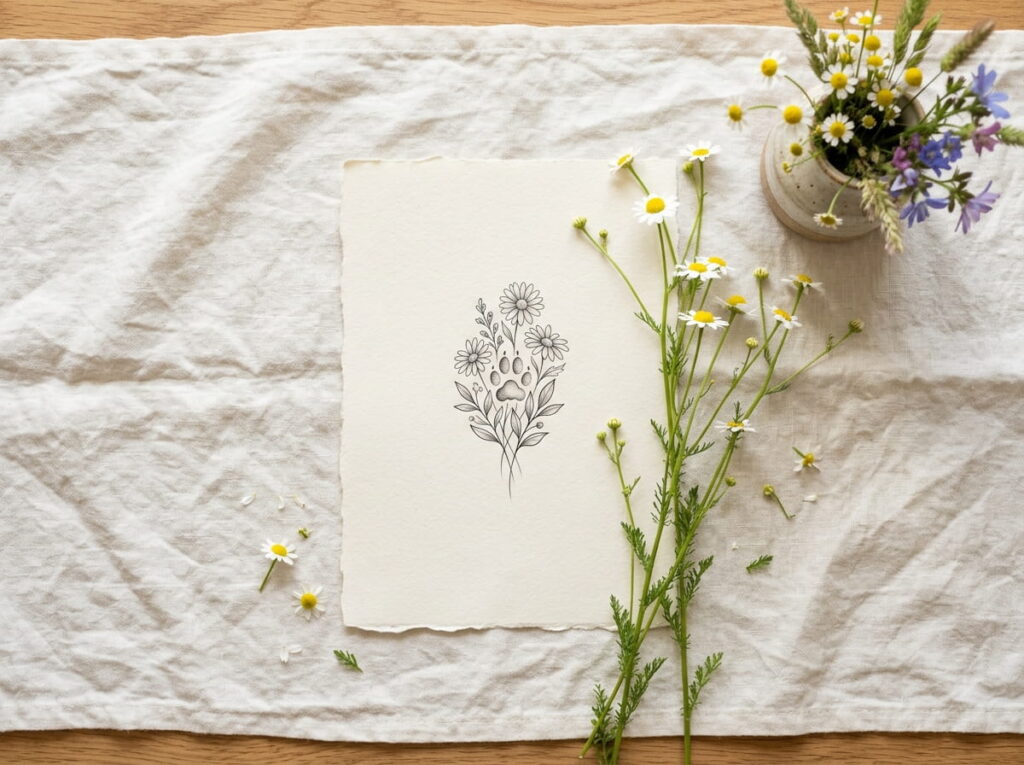
Flowers soften a paw print without hiding it. A small sprig curling around one side turns a simple mark into something that feels like a keepsake.
Birth flowers give it a quiet link to your dog’s own story. If you know the month they were born or adopted, you can pick the matching bloom. Otherwise, choose a flower tied to a memory, like the ones in the yard where they used to roll in the grass.
A few places to start:
- ▸Daisy, for a spring birthday or April arrival.
- ▸Sweet pea, for an April birthday and a gentle feel.
- ▸Lily of the valley, for a May birthday and a delicate look.
- ▸Sunflower, for a bright summer personality.
- ▸Violet, for a February birthday and a small, simple stem.
10. Draw Their Ears Alone as a Subtle Outline
Floppy, folded, or pricked up, ears are one of the easiest ways to spot a dog from across the room.
An ears only tattoo skips the face entirely. It is just a pair of soft shapes, sometimes joined by a tiny heart or a single curved line for the head. Strangers will read it as a simple, pretty doodle. You will know exactly whose it is.
Sit with a photo for a while and notice how the ears sat when they were happy, or listening, or half asleep.
Pick the ear position you remember most, not the one that looks best in a photo. That is the detail that will feel like them.
11. Add Wings or a Halo to a Paw Print for a Gentle Sendoff
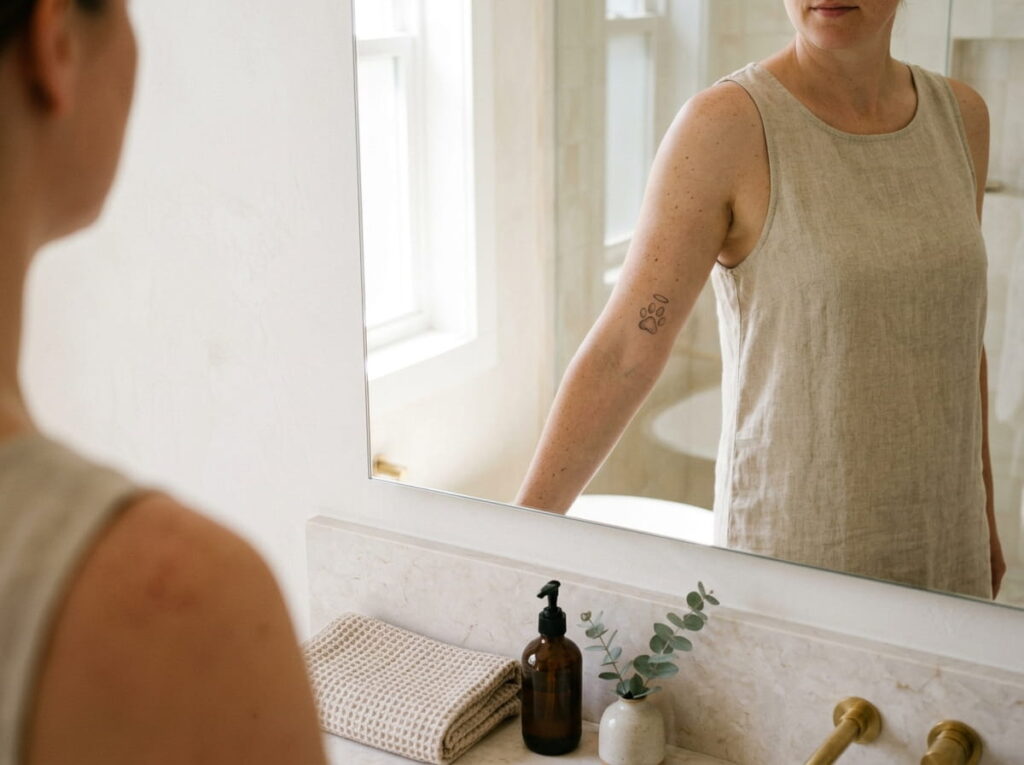
Some people want the tribute to say “at peace” without a single word.
A small pair of wings on either side of a paw print does that, and so does a thin halo floating above it. Keep the wings light, with just a few feather lines on each side. Heavy, detailed wings pull attention away from the paw, which is the part that matters.
Choose one or the other. Wings and a halo together can start to feel crowded at small sizes.
⚠️ Watch Out
Wings need width. If you want them on a narrow spot like a finger or the side of a wrist, ask your artist to stretch them sideways in a flat shape, or choose a halo instead so nothing gets squeezed.
12. Set a Rainbow Bridge Arc Over a Small Paw
Many dog owners know the Rainbow Bridge poem, and an arc over a paw print is a quiet nod to it.
You do not need a full rainbow of loud colors. A single thin arc in soft watercolor shades, or even one line in black, reads as gentle and still gets the idea across. Color fades faster than black ink, so ask your artist how it will hold up in the spot you choose.
Pick the style that fits your skin, your budget, and how much sun that area sees.
13. Trace Their Nose Print as a One of a Kind Mark

A dog’s nose has a pattern of ridges and bumps, a bit like a fingerprint, and no two look the same.
If your dog is still with you, a nose print can be made at home with a washable ink pad and a bit of patience. Press lightly, once, on a piece of paper. If they have passed, check whether your vet kept a record or took a photo of the nose up close.
It is a more unusual choice than a paw, and some people like that it is truly theirs alone.
| Nose print | Paw print |
|---|---|
| Easy to recognize: only to you | Easy to recognize: to nearly everyone |
| Gathering it: harder, needs a close up | Gathering it: simple with an ink pad |
| Detail: fine, so keep it a bit larger | Detail: bold shapes, easy to shrink |
14. Pair Your Dog With a Meaningful Quote or Short Phrase
Words can say what a picture cannot, but they are also the easiest part to get wrong.
Short phrases age better than long ones. Think of a few words your dog heard every day, a line from the Rainbow Bridge poem, or something as plain as “good girl” or “best boy.” Skip anything that takes more than a line or two to read.
Let the words sit beside a paw print or small heart, and keep the lettering simple and readable.
Choose three to six words at most.
Use a clear script or a simple print font.
Read it out loud and see if it sounds like you.
Long poems squeezed into a tiny space.
Ornate fonts with thin, looping strokes.
Quotes you found online and never really felt.
15. Wait Before You Book, Then Bring a Reference Photo to Your Artist
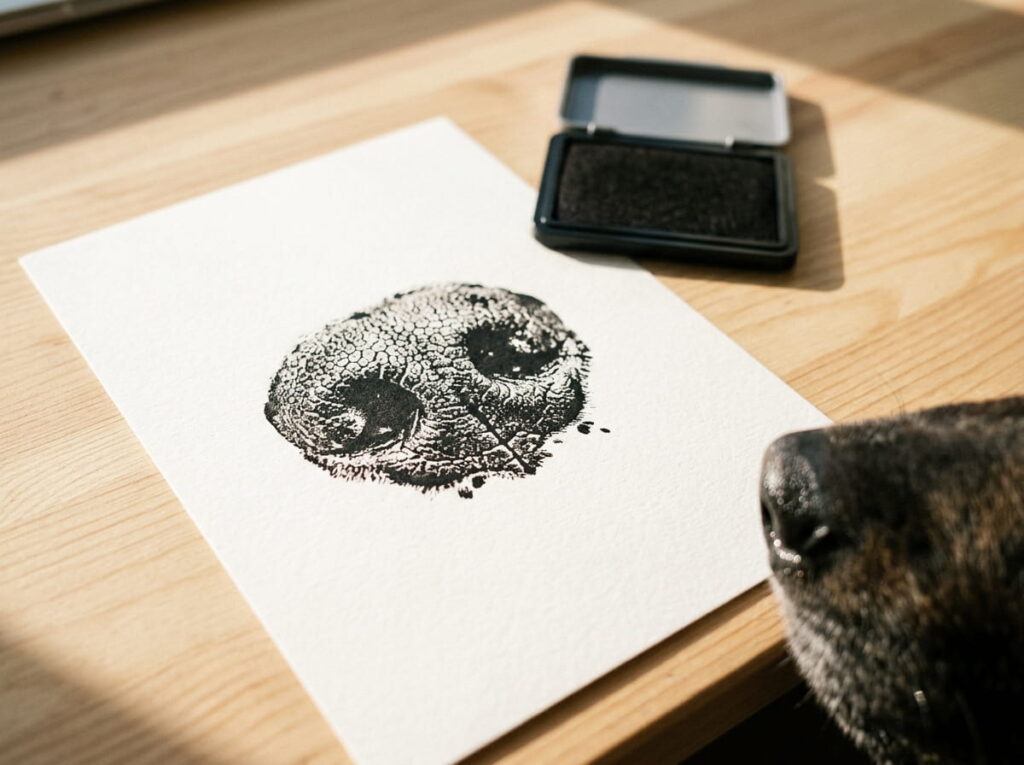
Grief can make a decision feel urgent. Most artists will tell you it is fine to wait.
A few weeks gives you time to know whether a design still feels right once the first rush of loss has settled. When you do book, bring everything that helps the artist see your dog the way you do.
There is no wrong timeline. Some people book within days, and some wait a year or more. Go at the pace that feels steady to you.
Before you book
Conclusion
A dog memorial tattoo does not have to be big, bold, or perfectly planned. It can be a small paw behind your ear, a name in your own handwriting, or a pair of floppy ears drawn in a few thin lines. What matters is that it feels like them when you look down.
If you are still choosing, give yourself time. Let two or three of these dog memorial tattoo ideas stay on your mind for a few weeks and see which one keeps coming back. That one is usually the right one.
They loved you without conditions, and you get to carry them the same way.
Save this list to your tattoo board so it is waiting for you when you are ready.
Leave a Reply