A sunflower tattoo has a strange trick to it. It can look loud and soft at the same time, which is probably why it shows up on so many different people in so many different sizes. Some want one bold enough to notice from across a room. Others want something small and private, tucked somewhere only they know about.
If you are scrolling through sunflower tattoo ideas trying to figure out where yours fits, the real question is not whether sunflowers are a good choice. They almost always are. The real question is style, placement, and how much detail your skin and your patience can actually handle.
This list covers both ends. You will find simple linework options that take under an hour, and detailed realistic pieces that need a longer sit. Some read as cheerful, some read as a little more serious, depending on the shading and the colors you pick.
Scroll through, save the ones that catch your eye, and bring two or three to your consult so your artist can mix the parts you like best.
- 1. The One-Line Sunflower That Barely Looks Like a Tattoo
- 2. The Three Placements That Keep a Small Sunflower From Looking Lost
- 3. What a Watercolor Sunflower Session Actually Looks Like
- 4. The Realistic 3D Sunflower and the Shading Mistake That Ages It Badly
- 5. Fine Line or Bold Line: Which Sunflower Tattoo Actually Fades Better
- 6. A Sunflower That Means Something: Pairing It With a Bee
- 7. Sunflower and Mandala Centers for a More Geometric Look
- 8. The Sentence Every Sunflower Should Carry: Why Placement Changes the Meaning
- 9. The Spine Sunflower and Why It’s Not as Painful as People Think
- 10. Black and Grey Sunflowers: The Quiet Alternative to Color
- 11. Small Sunflower vs. Full Bouquet: Picking the Right Size for Your First Time
- 12. The Rib Cage Sunflower for Anyone Who Wants Something Bold but Hidden
- 13. How to Turn One Sunflower Into a Full Sleeve Later
- 14. The Tiny Finger Sunflower That Holds Up Surprisingly Well Over Time
1. The One-Line Sunflower That Barely Looks Like a Tattoo
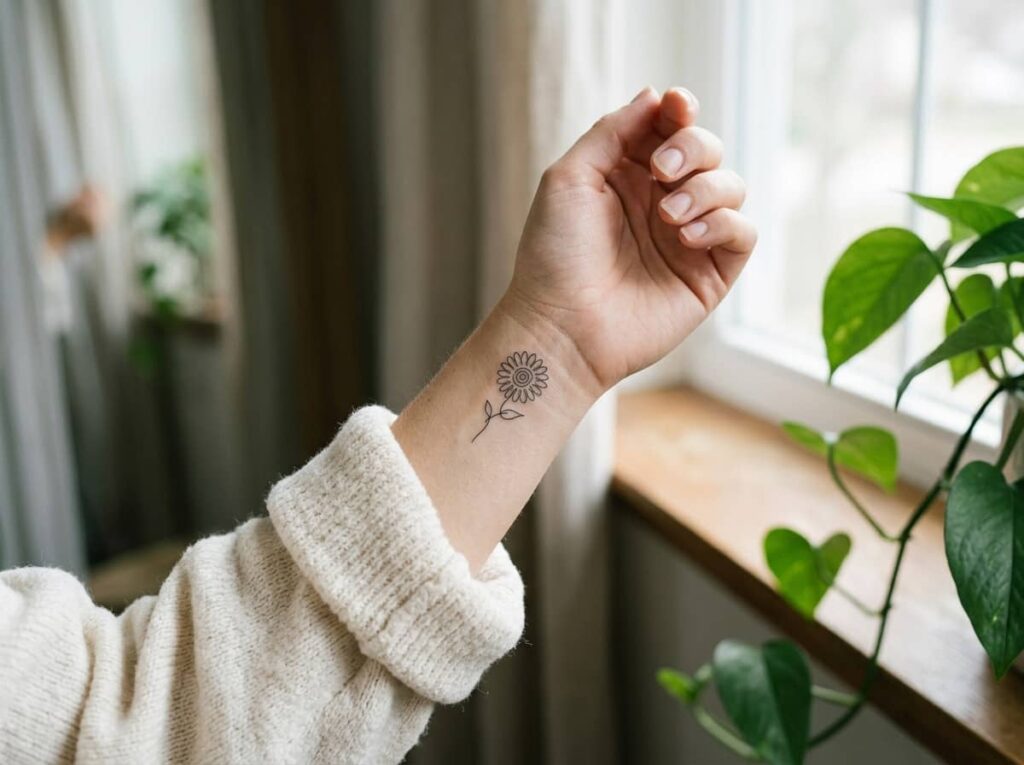
A lot of first tattoos try to do too much. Big florals, full shading, a dozen details packed into one small space. A one-line sunflower skips all of that. It is a single continuous line that traces the petals and center, nothing filled in, nothing shaded.
Good spots for this style:
- Inner wrist
- Behind the ear
- Along the collarbone
Most artists can finish one in under an hour, which makes it an easy add-on if you already have an appointment booked for something else.
💡 Quick Tip
Ask for a thinner needle size on a one-line sunflower. It keeps the petals crisp instead of letting them blur into one soft shape after healing.
2. The Three Placements That Keep a Small Sunflower From Looking Lost
Skin that curves slightly actually helps a small sunflower, since the curve adds a little dimension the ink alone cannot.
Three spots tend to hold the shape well without stretching or blurring over time. The ankle keeps lines tight because there is barely any fat under the skin there. The forearm gives you room to size up later if you decide you want more. The ribcage hides the piece under clothes but still shows a full bloom when you want it seen.
3. What a Watercolor Sunflower Session Actually Looks Like
You sit down, the stencil gets pressed onto your skin, and the outline goes on first, same as any other tattoo. The difference shows up once the color starts.
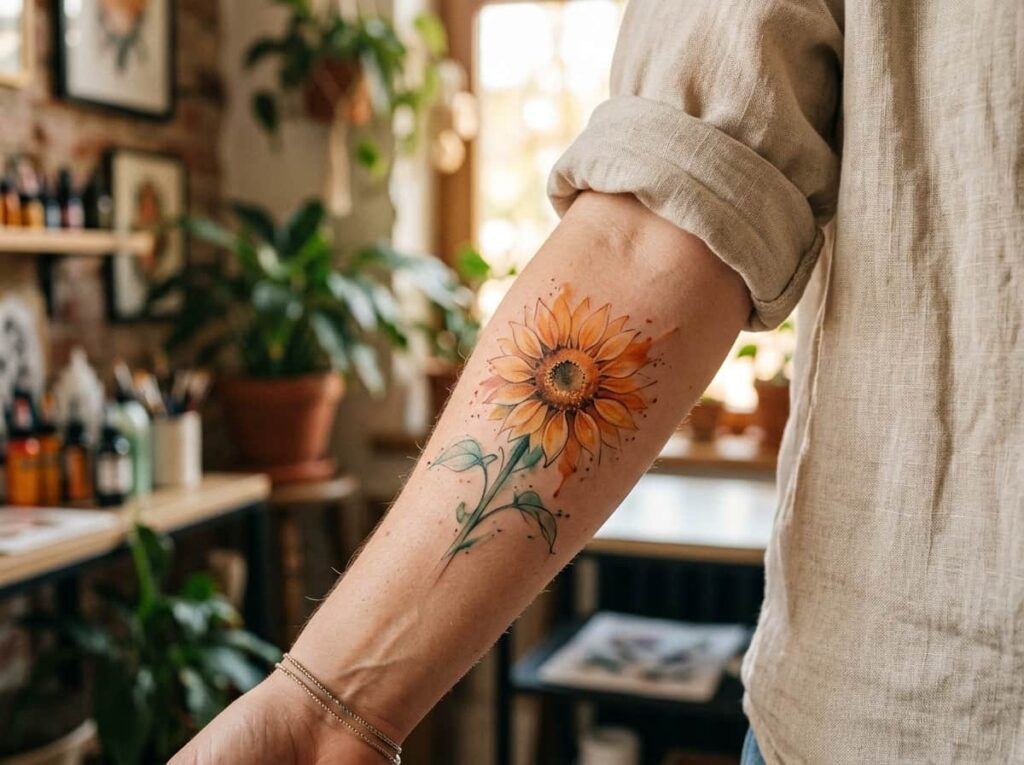
Watercolor sunflowers skip the usual black line borders. Instead the yellow and orange blend outward like the color spread past the edges on purpose, which is the look most people come in asking for.
The trade off is upkeep. Watercolor pieces fade faster than bold line work and usually need a touch up within two to three years to keep the blend looking fresh instead of muddy.
Stencil goes on and you approve the outline before any ink touches skin.
Color gets layered in soft passes so the blend looks intentional, not blotchy.
Plan on a color refresh in two to three years to keep the blend crisp.
4. The Realistic 3D Sunflower and the Shading Mistake That Ages It Badly
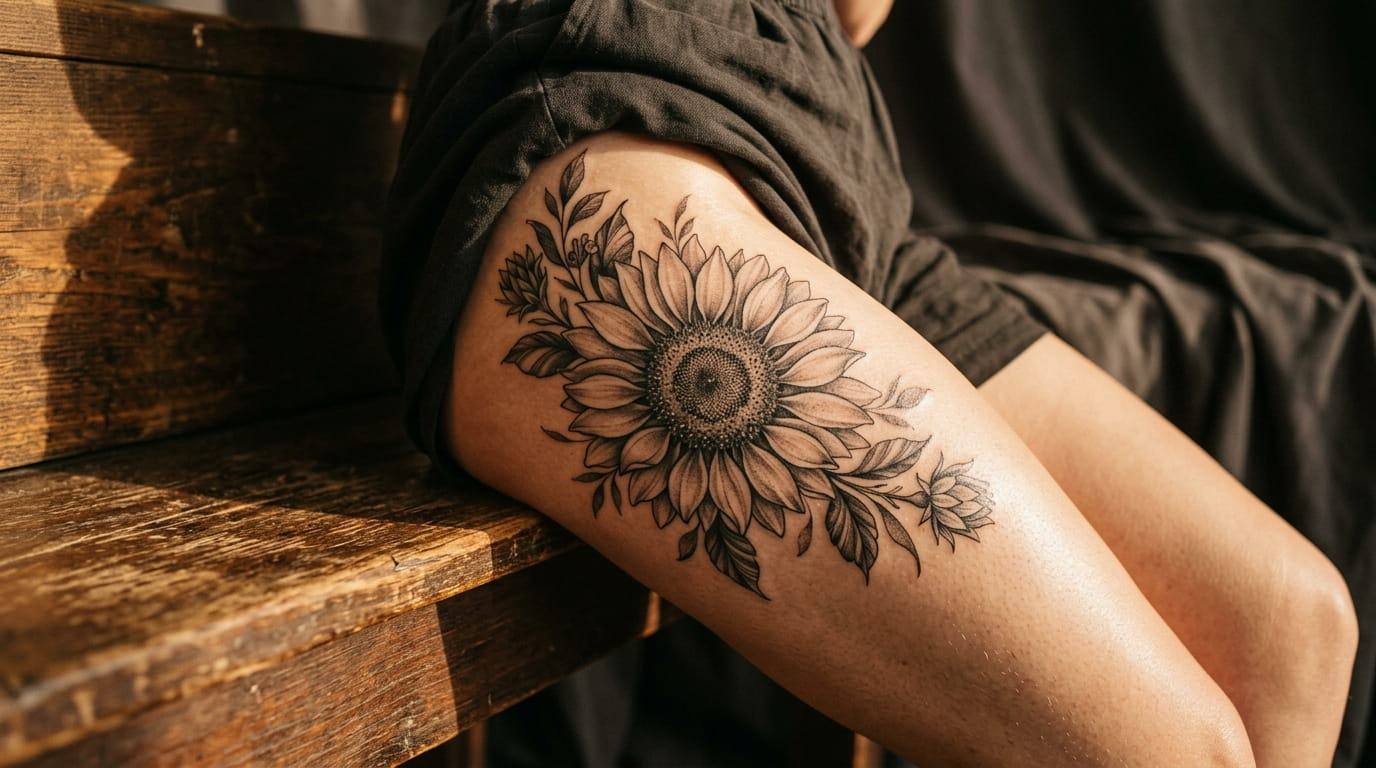
Most realistic sunflowers do not fail because of bad line work. They fail because of shading that is too heavy in the center, which makes the whole flower look like a dark blob within a few years as the ink settles.
A good realistic piece uses light, layered shading and leaves some areas of skin showing through, especially near the petal tips. That contrast is what reads as three dimensional once it heals, not solid black fill.
Layer shading gradually across a few passes.
Leave petal tips lighter for contrast.
Solid dark fill packed into the center.
No highlight left anywhere on the petals.
5. Fine Line or Bold Line: Which Sunflower Tattoo Actually Fades Better
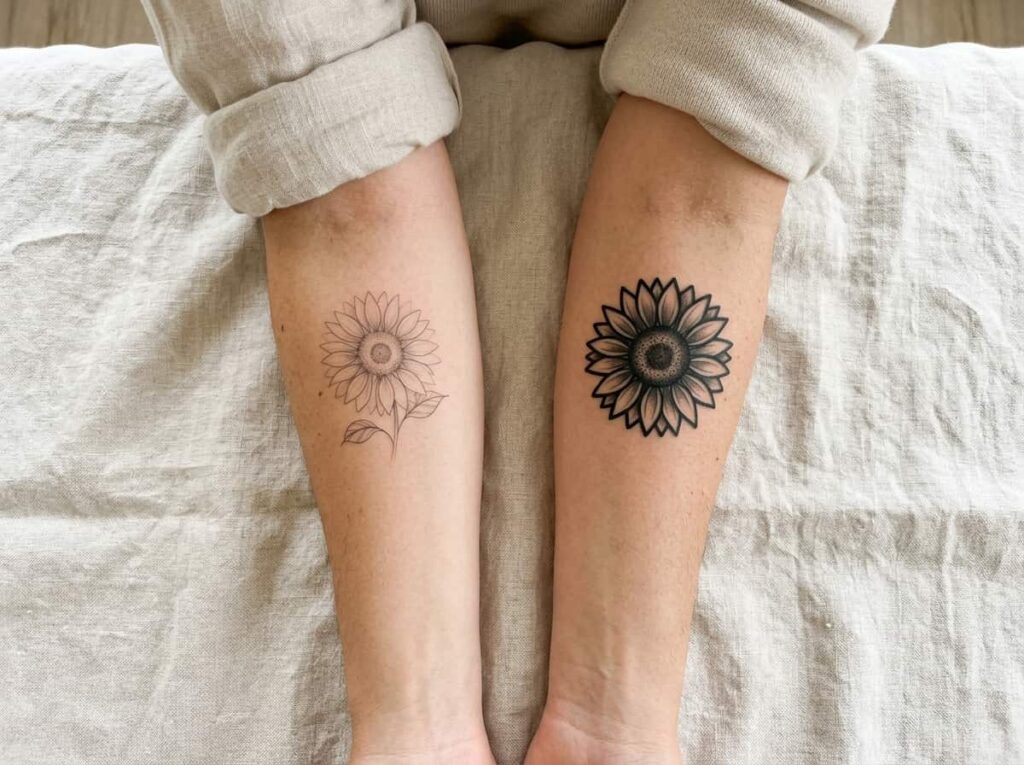
Fine line sunflowers look delicate right after the appointment, but they ask more of your skin over time. Thin lines spread slightly as skin ages, so a fine line sunflower from your twenties may look softer, almost blurred, by your forties.
Bold line sunflowers hold their shape longer because thicker lines have more room to spread before they lose definition. The trade off is a heavier, more graphic look from day one instead of something delicate.
| Fine Line | Bold Line |
|---|---|
| Delicate, detailed look at first | Graphic, confident look from day one |
| Can soften and blur with age | Holds its shape longer over the years |
6. A Sunflower That Means Something: Pairing It With a Bee
Add one small bee near the petals and the piece shifts from decorative to personal. Sunflowers already carry meaning on their own, usually tied to loyalty or staying warm through hard seasons, but the bee adds a second layer that a lot of people connect to growth, work, or a specific relationship worth marking.
It does not need to be large. A bee the size of your thumbnail, tucked near the base of the stem, reads clearly without competing with the flower for attention.
Most artists can add it in the same sitting as the sunflower itself, so there is rarely a reason to split it into two appointments.
7. Sunflower and Mandala Centers for a More Geometric Look
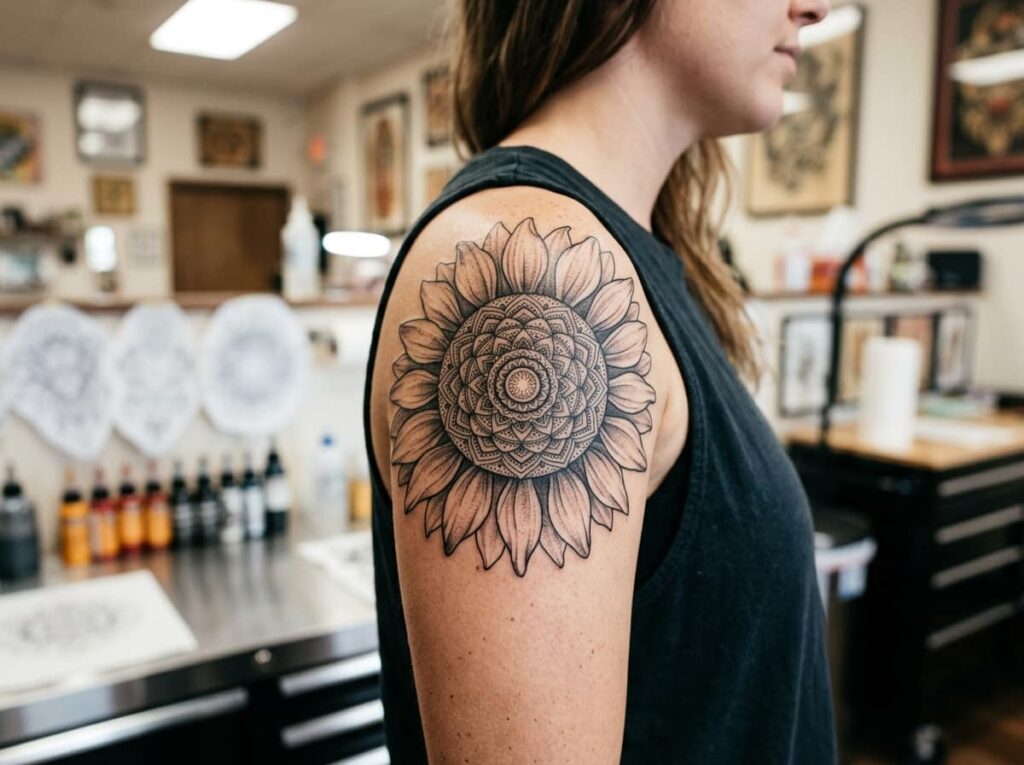
Swap the plain center of a sunflower for a mandala pattern and the whole tattoo reads as more structured, almost architectural, instead of purely botanical. The petals stay soft and natural while the center becomes the detailed, symmetrical focal point.
This style asks more of your artist, since the geometric lines need to stay even on skin that is never perfectly flat. Bring reference photos of mandala patterns you actually like before your consult, not just sunflower references.
Things worth bringing to that first meeting:
- A few mandala patterns, not just sunflower photos
- Your preferred size range, since detail shrinks fast on small pieces
- Whether you want the petals in color or kept black and grey
Bring to your consult
8. The Sentence Every Sunflower Should Carry: Why Placement Changes the Meaning
A sunflower on your forearm says something different than the same exact design on your ribs. Visible spots turn the tattoo into a daily reminder, something you see while typing or washing your hands. Hidden spots turn it into something private, seen only when you choose to show it.
Neither is more meaningful than the other. The choice just depends on whether you want the sunflower to be part of how people see you, or something that belongs only to you.
Placement is not just practical. It decides whether the tattoo is for you or for everyone around you.
9. The Spine Sunflower and Why It’s Not as Painful as People Think
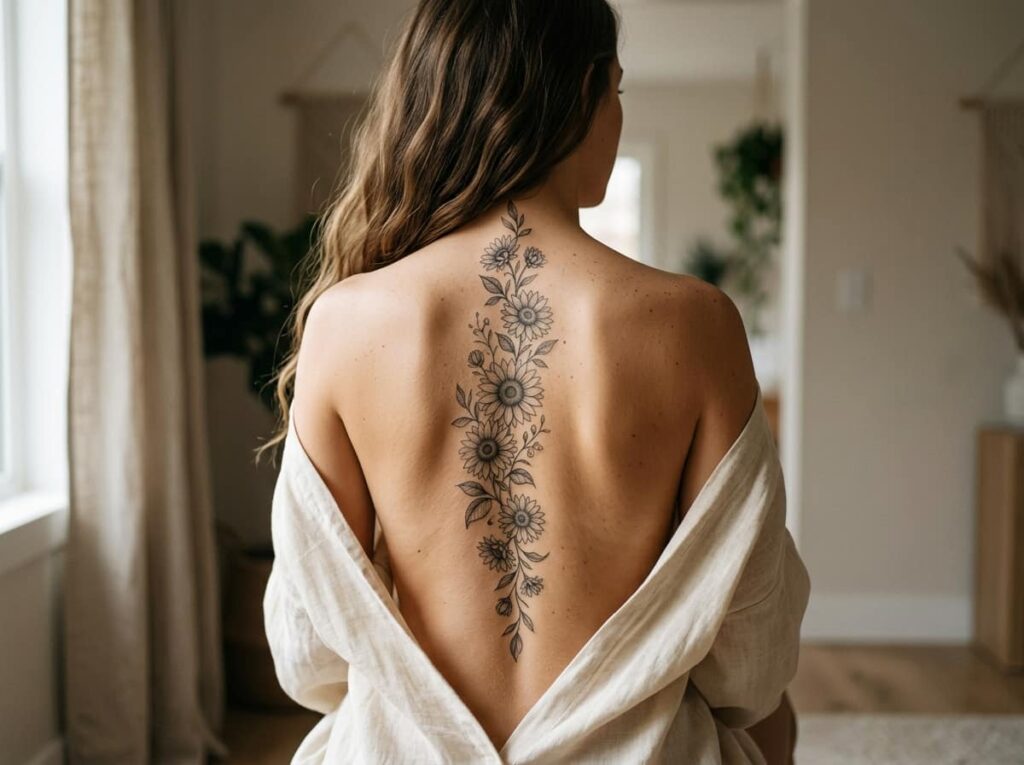
A lot of people skip the spine entirely because of pain rumors that do not hold up once you ask an actual artist. Pain depends more on exact position than most people assume. Directly over the vertebrae stings more. A few inches off to either side, where there is more muscle and less bone, feels closer to a normal tattoo on fleshy skin.
A vertical sunflower chain following the spine’s natural curve is one of the more striking placements available, since the body’s own shape does half the design work for you.
📌 Good To Know
Ask your artist to place the design slightly off center from the spine itself. It hurts less and still reads as a spine tattoo.
10. Black and Grey Sunflowers: The Quiet Alternative to Color
Not every sunflower needs yellow to work. A black and grey version trades the bright color for shading and contrast, and it tends to age better since there is no color to fade or shift tone over the years.
It also fits more easily into an existing black and grey sleeve or piece without clashing against other work.
Bright and cheerful, but fades and shifts tone as color ink ages.
Quiet and timeless, holds contrast well, blends into existing black work.
11. Small Sunflower vs. Full Bouquet: Picking the Right Size for Your First Time
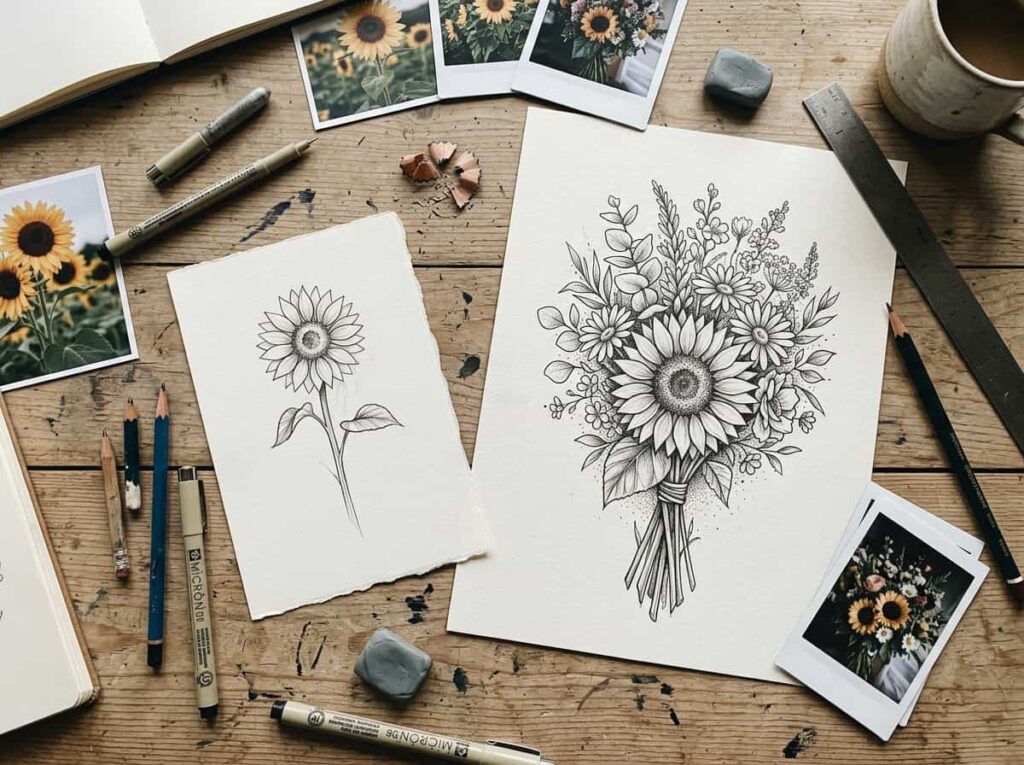
A single sunflower and a full bouquet ask very different things from your skin, your wallet, and your patience in the chair. Neither one is the “right” choice, but knowing the trade offs ahead of time saves you from regretting the size once you’re already booked.
A single flower is forgiving. It heals fast, costs less, and still reads clearly even in small sizes like two inches across. A bouquet needs more real estate to keep each flower distinct, otherwise the petals blur together into one shapeless cluster.
| Single Sunflower | Full Bouquet |
|---|---|
| Reads clearly even at 2 inches | Needs more space to stay distinct |
| Shorter sit, lower cost | Longer session, higher cost |
12. The Rib Cage Sunflower for Anyone Who Wants Something Bold but Hidden
The ribcage gives you a flat, wide canvas most other spots can’t offer, which is why it’s a common choice for bigger, more detailed sunflower pieces that would feel cramped on a wrist or ankle.
It’s also one of the more sensitive spots on the body, so most people split a large ribcage piece across two sessions instead of pushing through one long sit.
13. How to Turn One Sunflower Into a Full Sleeve Later
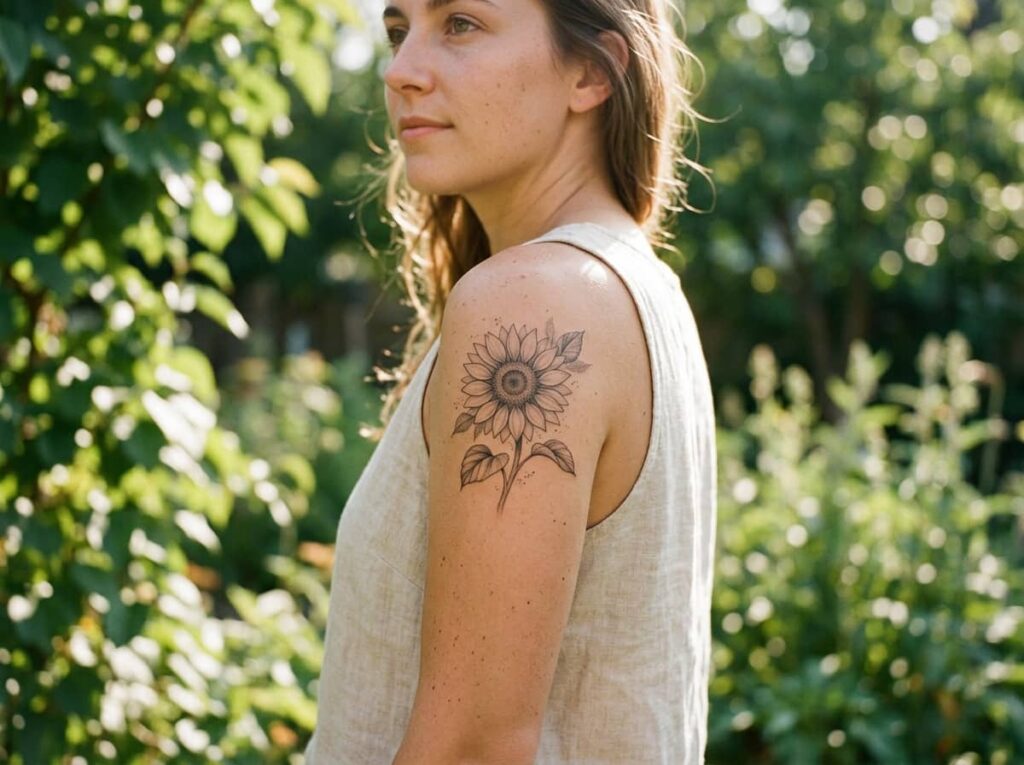
Plenty of sleeves started as one small sunflower that someone liked enough to keep building on. If that’s the plan from the start, it changes how the first piece should be designed.
Leave breathing room around the first flower instead of centering it perfectly in the space. Ask your artist to sketch roughly where future pieces might sit, even if you’re not getting them yet. Pick one consistent style, whether that’s fine line, realistic, or black and grey, so later additions match instead of clashing.
Leave open space around the first flower instead of centering it.
Have your artist sketch a rough map of where future pieces could go.
Lock in one style now so later additions blend instead of clashing.
14. The Tiny Finger Sunflower That Holds Up Surprisingly Well Over Time
Finger tattoos have a reputation for fading fast, and that reputation is fair for most designs. Sunflowers are an exception worth knowing about. Their shape is simple enough that even after some ink loss, the flower still reads clearly instead of turning into a blurry smudge.
Keep it small, keep the lines simple, and skip heavy shading, since fine detail is what finger tattoos lose first.
Simple shapes survive finger tattoos best. Save the fine shading for a spot with thicker skin.
Conclusion
A sunflower tattoo works because it bends to whoever is wearing it. Someone wants a single line on a wrist that takes twenty minutes. Someone else wants a realistic bouquet across their ribs that takes three sittings. Both are the same flower, just scaled to different lives.
If you’re still deciding, think less about which design looks best on its own and more about where it needs to sit on you, how much detail your skin can actually hold at that size, and whether you want it seen every day or just by you. Those answers narrow the list fast.
Whichever sunflower tattoo ideas caught your eye, bring two or three references to your consult instead of just one. It gives your artist room to mix the parts you liked most into something that’s actually yours.
Save this list for whenever you’re ready to book that consult.

Leave a Reply