
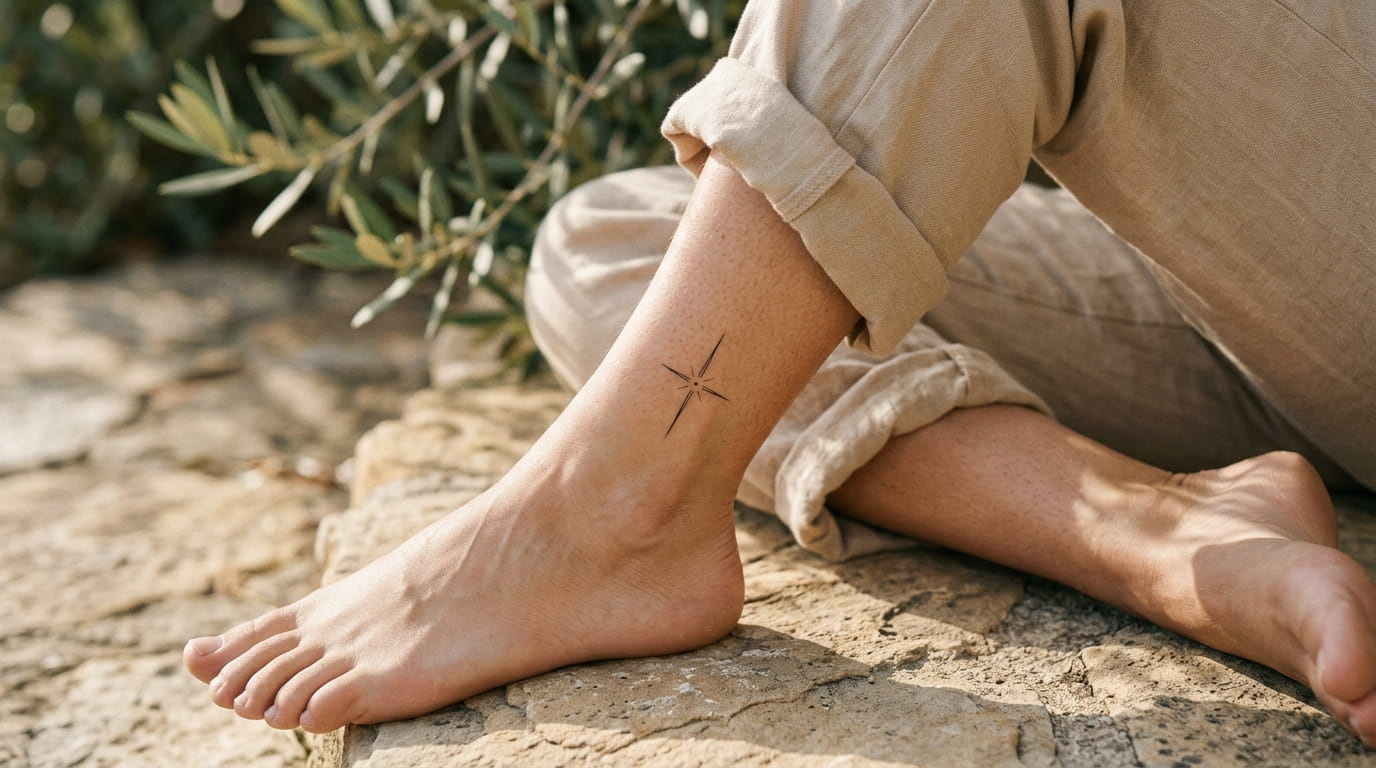
A lot of tattoo boards show the same five star designs over and over, usually bigger and more detailed than anyone asked for. If you want something small, something that fits on a wrist or finger without taking over, those boards are not much help.
Small star tattoos look simple from a distance, but the shape, the spacing, and the linework all change how they read up close and how they age over the next few years. A sparkle shape and a single dotwork point are not interchangeable, even though they both get filed under the same search.
This list groups ideas by shape instead of by meaning, so you can actually compare a shooting star streak to a dotwork cluster side by side. Each one includes where it tends to work best on the body and what to flag for your artist before you sit down. Save the ones that fit the spot you already have in mind.
1. The Single Point Star, Kept Deliberately Plain
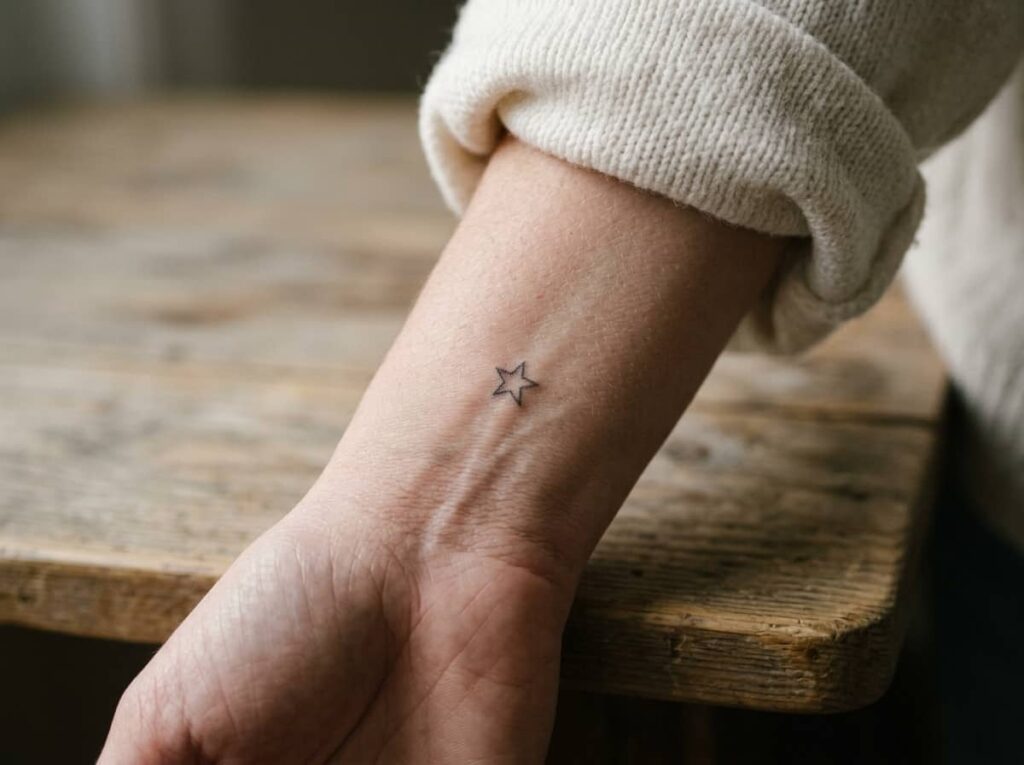
One rule works here: the plainer the star, the longer it holds up.
A single point star, just five clean lines meeting at a center, does not depend on fresh ink to look sharp. There is no shading to fade unevenly and no fine dots to blur over time. It reads just as well at six months as it does on day one, which matters if this is your first tattoo and you are not ready to commit to upkeep. This is the shape to pick if you want something nobody looks twice at unless they are already looking closely.
2. The Shooting Star Streak, With a Tapered Tail Instead of a Dotted One
A shooting star streak reads as motion only when the tail tapers instead of staying one even width the whole way down. A straight bar with a star stuck on one end looks more like a comet sticker than a tattoo.
Ask for the tail to thin out gradually and set it at an angle instead of running it perfectly straight. A slight curve, even a small one, keeps it from going stiff once it has healed and settled into the skin.
💡 Quick Tip
Ask to see the tail at full size before it gets outlined. A taper that looks right in a small sketch can read as too thin once it is actually under the needle.
3. The Diagonal Three Star Climb, Small to Large
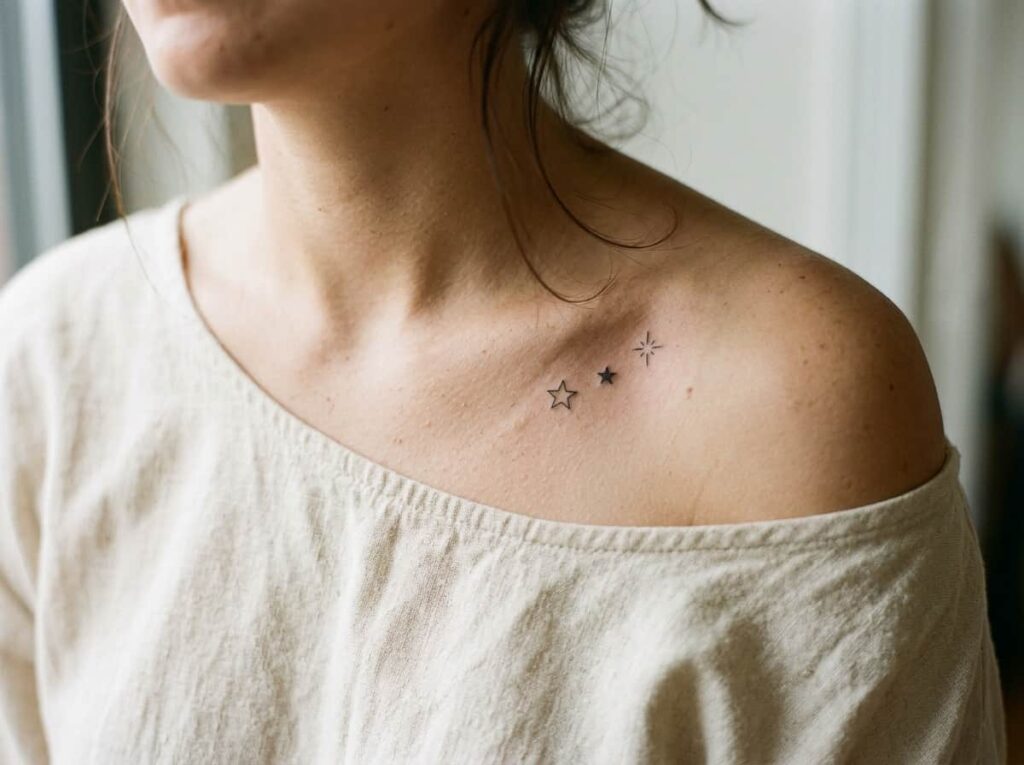
Three stars set in a climbing line, smallest to largest, works because the eye reads it as a sequence instead of a scattered group. It is one of the easiest small star layouts to keep balanced, even for a first time artist working at this scale.
This line tends to land in a few spots: along the collarbone angled toward the shoulder, down the side ribs toward the hip, or in a short row tucked behind the ear.
4. The Sparkle Star, Built From Uneven Lines on Purpose
The most common mistake with a sparkle star is making all five lines the same length, which flattens the whole design into a plus sign instead of something that sparkles.
Keep the center point slightly longer than the four around it, and let two of the four sit a touch shorter than the other two. That small imbalance is what keeps the shape from looking mechanical once it has healed.
Place the center point first, slightly longer than the rest.
Add the two longest side lines crossing through it at an angle.
Fill the remaining gaps with two shorter lines to finish the sparkle.
5. The Open Outline Star, Left Unfilled
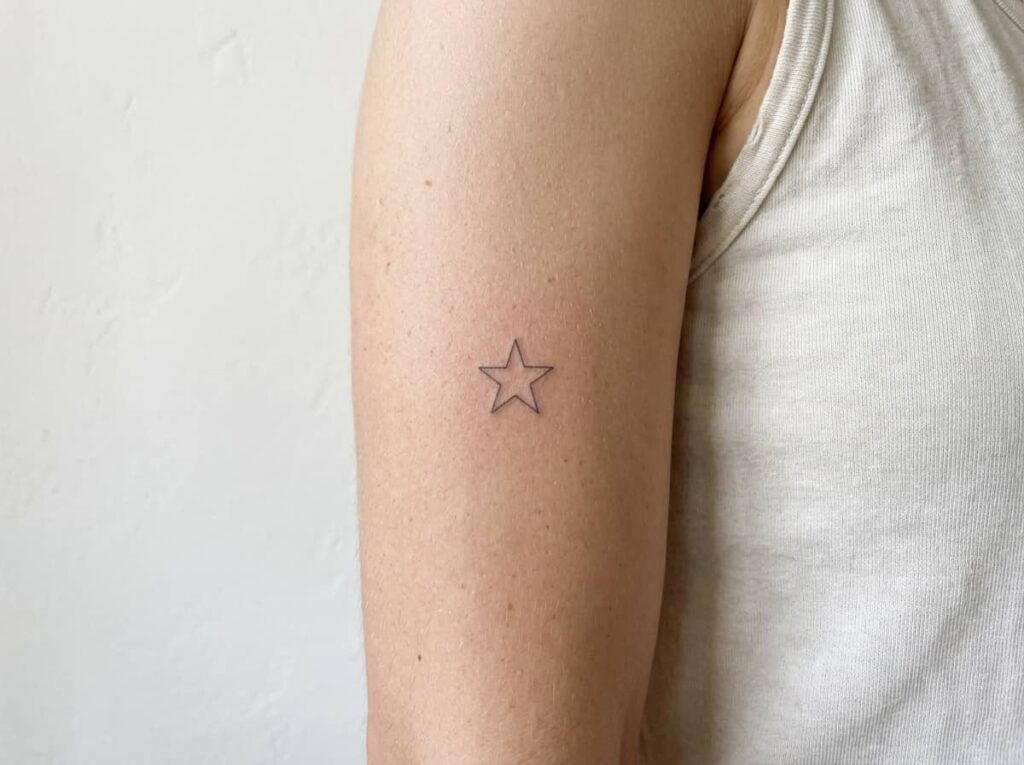
People assume any star tattoo can be left as a thin unfilled outline, but outline only work does not age the same way a solid shape does. Fine lines blur faster, especially anywhere skin stretches or rubs against clothing.
An outline star can still work well. It just needs a slightly thicker line at the points and a size that gives the linework room to hold its shape for years, not months.
Ask for slightly thicker linework at each point.
Place it somewhere with little daily friction or stretch.
Very thin outlines on fingers or elbows.
Sizing it so small the lines nearly touch.
6. The Dotwork Star Cluster, Built From Stippled Dots
Dotwork softens a star cluster in a way solid linework cannot. Instead of hard edges, the shape builds up from hundreds of small dots, so the stars look almost dusted onto the skin rather than drawn on top of it.
It takes longer in the chair than a linework version of the same size, and it needs a steadier hand from your artist. The payoff is a texture that photographs beautifully and ages softer instead of harder, since there is no solid edge to crack or blur.
| Dotwork | Linework |
|---|---|
| Soft, dusted texture | Crisp, defined edges |
| Longer session time | Faster to complete |
| Ages into a softer blur | Holds sharp lines longer |
7. The Wrist Crease Trio, Set Into the Natural Fold
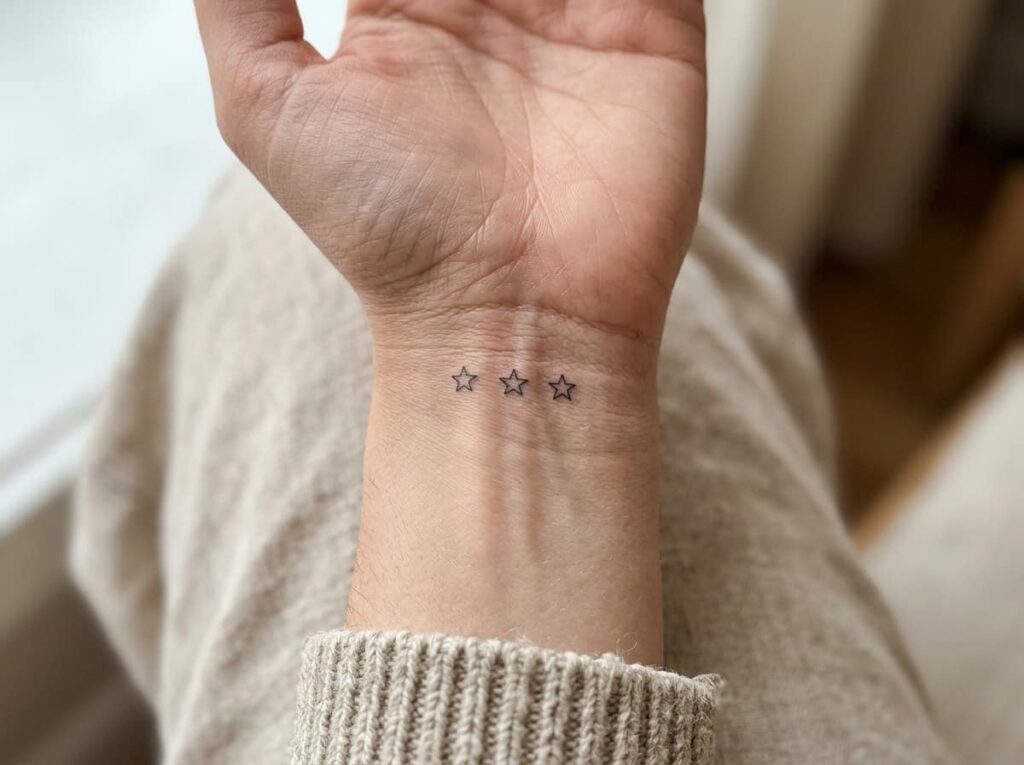
Most wrists have a faint crease that shows up when the hand bends back, and three tiny stars set right along that line settle into the skin instead of sitting on top of it. The fold does the framing for you.
Keep the stars small enough that the crease does not stretch or distort them when you move your hand, and space them with slightly more room than you think you need.
Let the wrist crease guide the placement instead of fighting against it. The fold is already doing half the design work for you.
8. The Star and Crescent Pairing, Set Slightly Apart
Pair a small star with a crescent moon and leave real space between them, maybe a half inch or more, so the two shapes read as a pairing instead of one crowded cluster. Too close together and the crescent’s curve competes with the star’s points for attention.
Bring a reference to your appointment that shows the exact gap and angle you want. This is a design where a small shift in spacing changes the whole feel.
Before your appointment, bring:
9. The Scattered Constellation Look, Kept Uneven on Purpose
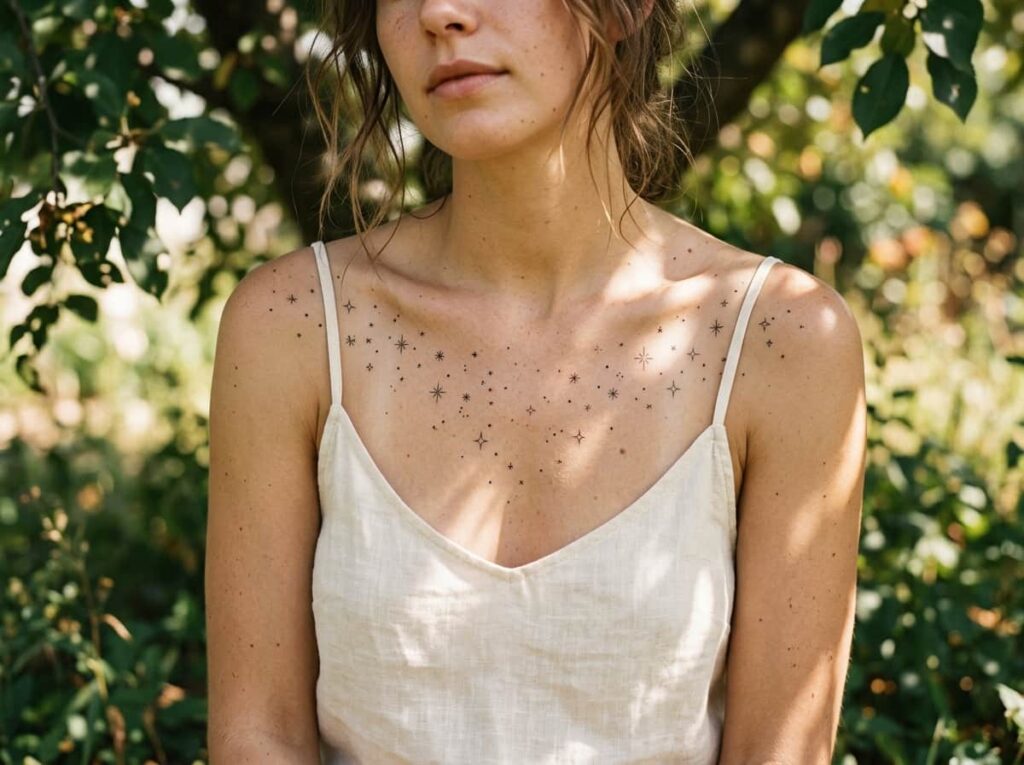
A scattered star layout falls apart when the stars end up too evenly spaced, since even spacing starts to look planned instead of natural. Real constellations are messy, and the tattoo should borrow that messiness.
Mix three or four sizes, leave noticeably more space in some gaps than others, and resist the urge to line anything up in a row.
Five stars, same size, spaced evenly in a neat row. Reads flat and a little stiff.
Mixed sizes, uneven gaps, a few stars clustered and others alone. Reads like a real sky.
10. The Behind the Ear Single Star, Picked for How Easily It Hides
I know a few people with this exact placement, and the reason they picked it almost never has to do with the star itself. It has to do with being able to pull their hair down and have it disappear completely before a work meeting.
That kind of control over visibility matters more to some people than the design does. A few things to know before booking this spot:
- ▸Healing takes longer here, since hair and hats rub against fresh ink.
- ▸Thin skin in this spot can make the tattoo slightly more sensitive to sit through.
- ▸Fine detail holds up well here since the skin stays tight over time.
11. The Finger Side Star, Tucked Along the Edge
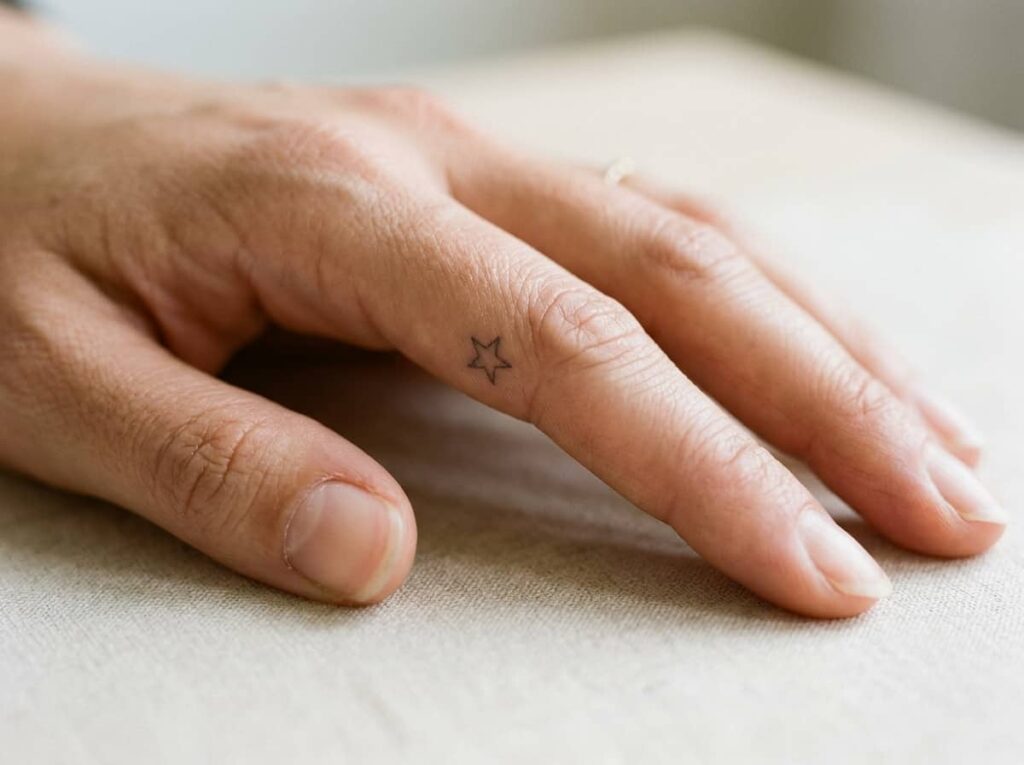
A star placed on the side of a finger, not the front, tends to hold up better than most finger tattoos, since it sits away from the spots that take the most daily friction from gripping and typing.
Fingers heal fast on the surface but fade fast underneath, so go in expecting this one might need a touch up within the first year. That is normal here, not a sign anything went wrong.
Plan for a touch up around the six to twelve month mark.
Keep the design simple, a single point star holds up best.
Fine dotwork here, it fades fastest on fingers.
Placing it on the front crease where grip wears it down.
12. The Crossing Shooting Star Pair, Set at Different Angles
Two shooting stars crossing paths only works if the angles are different enough to actually read as crossing. Set them too close in angle and they just look like one thick, confused streak.
Aim for at least a 40 to 50 degree difference between the two tails. Let one sit slightly longer than the other so your eye has a clear path to follow through the crossing point instead of getting stuck there.
Sketch the first streak at the angle and length you want.
Add the second streak at least 40 degrees off from the first.
Let them cross off center rather than dead in the middle of the design.
13. The Ankle Star Ladder, Stacked Vertically
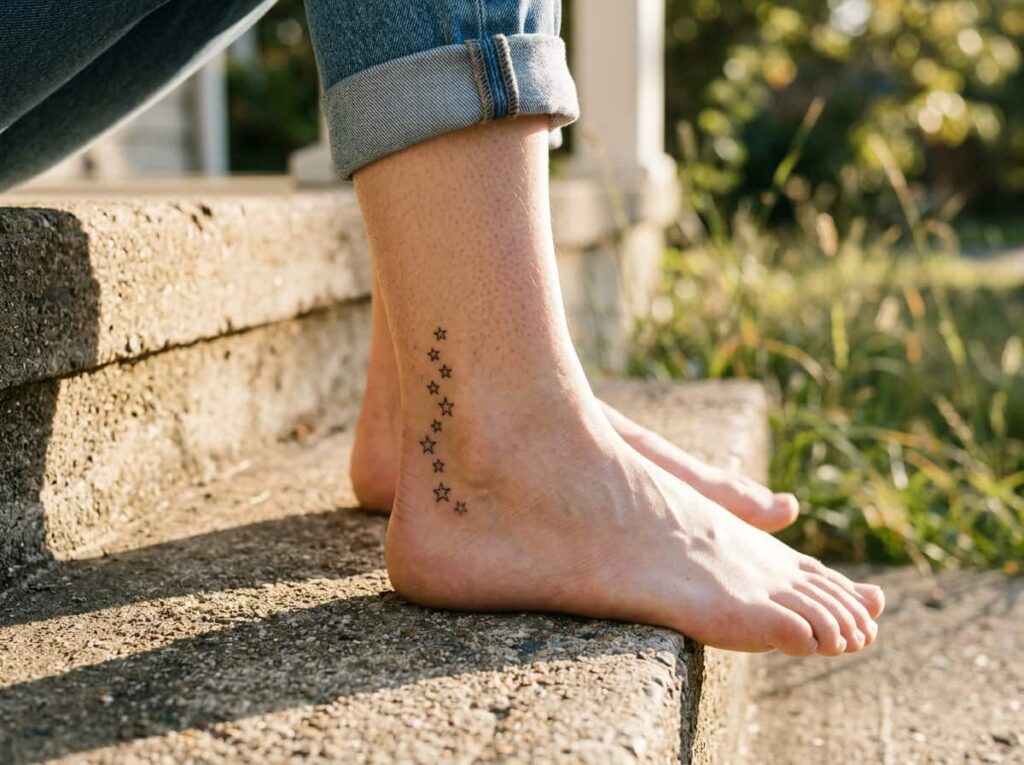
A short vertical row of stars climbing up the ankle bone reads differently than the same stars would anywhere else on the body, since the movement of walking makes the whole line shift and catch light as you move.
This placement rewards patience during healing more than most. Socks and shoes rub against this spot constantly in the first two weeks.
14. The Four Point North Star, With Elongated Ends
Swap the usual five points for four longer ones and the whole star reads less like a doodle and more like a compass mark, something closer to what old maps used to show as true north.
This is the shape to ask for if every other star on this list feels a little too soft or decorative for what you want. It holds its form at tiny sizes better than a five point star does, since there are fewer thin points to blur.
📌 Good To Know
Four point stars need slightly longer points than five point ones to avoid looking like a plus sign once the ink settles. Ask your artist to exaggerate the length a little in the stencil.
Final Thoughts
Small star tattoos hold up best when the shape actually fits the spot you pick for it, not the other way around. A dotwork cluster that looks soft and beautiful on a shoulder blade will not read the same way crammed onto a finger, and a crisp four point star loses nothing at a tiny size where a detailed sparkle might blur.
Go into your appointment with a specific shape in mind, not just “a small star tattoo,” and bring a reference that shows spacing and angle, not just the general idea. That one step saves most of the back and forth in the chair.
Whichever shape you land on, from a single plain point to a full constellation scatter, the best small star tattoos are the ones picked with the placement already in mind.





Leave a Reply