Most people walk into a tattoo shop asking for a rose and walk out with the same stem, same three petals, same spot on the wrist that a hundred other people already have. That is not a failure of imagination so much as a lack of options nobody showed them. Roses can be wilted, skeletal, scattered across a shoulder, washed in blue ink, or wrapped around a name that matters. The flower has more range than its reputation suggests.
If you are searching for rose tattoo ideas for women that still feel personal years from now, the trick is picking a style that fits how you actually want to look at your own skin, not just what is trending this week. Some of these lean soft and painterly. Others go dark, sharp, or strange in a way that reads as confident rather than safe.
What follows are twelve directions that move past the red rose default, each with a reason it works and what kind of person tends to pick it. Bring whichever ones catch your eye to a consultation and let your artist adjust the details to your skin tone, size, and placement.
- 1. Watercolor Rose Tattoos That Look Like a Painting Bled Onto Skin
- 2. Fine Line Single Stem Roses for a Barely There Look
- 3. Black and Grey Realism Roses With Shadow and Depth
- 4. Wilted Rose Tattoos That Turn Fading Beauty Into Meaning
- 5. Blue and Lavender Roses for a Color Twist on Tradition
- 6. Rose Skeleton Tattoos for an Edgy Anatomical Spin
- 7. Geometric Mandala Roses That Mix Structure With Softness
- 8. Scattered Mini Rose Clusters Instead of One Big Bloom
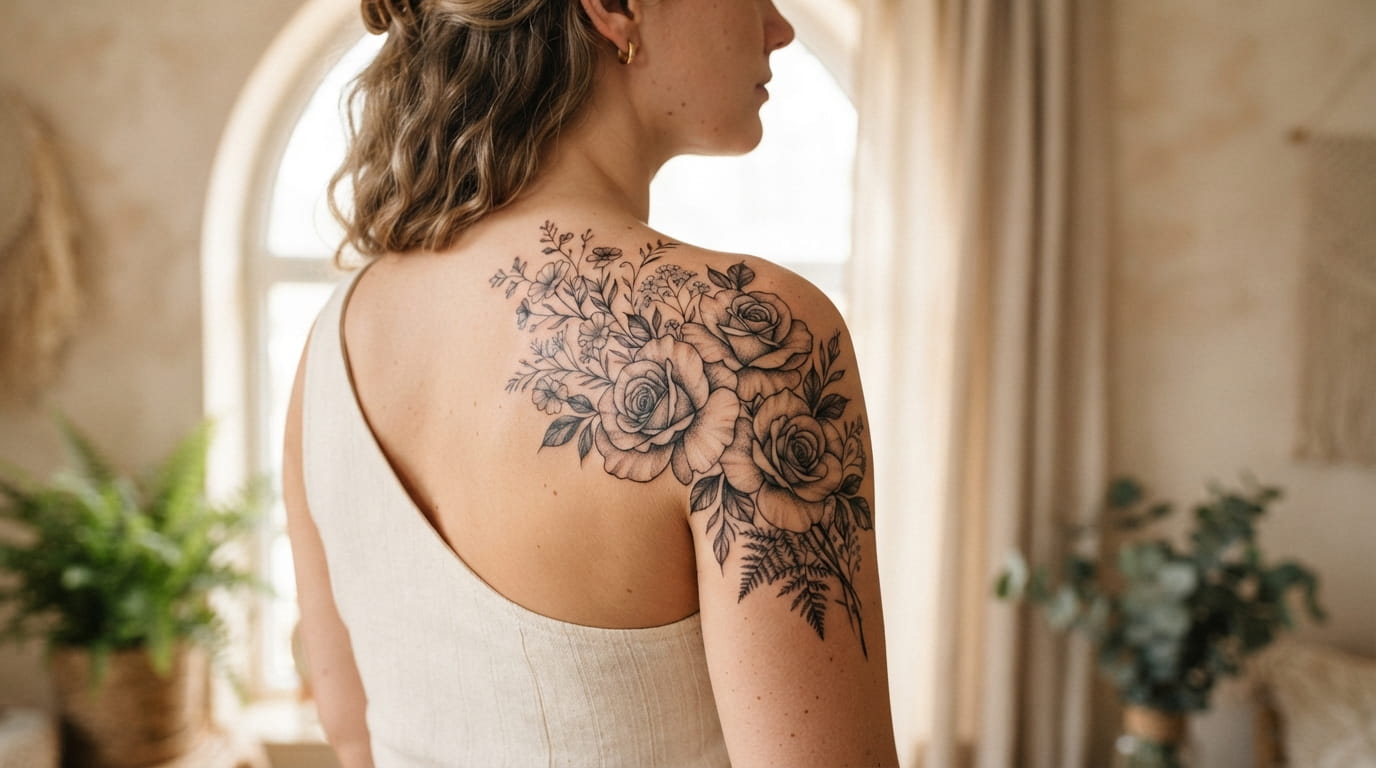
- 9. Rose and Wildflower Bouquets for a Botanical Garden Feel
- 10. Gothic Black Roses With Heavy Shading and Sharp Thorns
- 11. Roses Wrapped Around Script for a Personal Tribute
- 12. Roses in Unexpected Spots Like the Spine or Behind the Ear
1. Watercolor Rose Tattoos That Look Like a Painting Bled Onto Skin

Color bleeds past the lines on purpose here, soft and uneven like watercolor on paper. The rose outline stays loose while pink, coral, or violet ink pools around it in soft clouds.
What makes this style work:
- Skin tone matters more than usual, since pale pinks show up differently on deeper skin
- Fine details fade faster than bold ones, so simple petal shapes age better than tiny veins
- A skilled colorist matters here more than the tattoo size
Ask to see healed photos of watercolor work specifically, not just fresh ink, since this style changes the most as it settles.
2. Fine Line Single Stem Roses for a Barely There Look
One stem reads as intentional. Three stems in thin line work start to look unfinished within a year, since fine lines blur together once they sit close.
A single rose done in one continuous line, with no shading, holds its shape the longest in these spots:
- Inner wrist
- Behind the ear
- Along the ribs
- Ankle bone
Skip fine line roses on elbows or knees, where constant movement breaks up thin ink faster than anywhere else.
📌 Good To Know
Ask for a single bold line weight instead of a thin, wavering one. It holds its shape far longer as fine line ink naturally softens over the years.
3. Black and Grey Realism Roses With Shadow and Depth
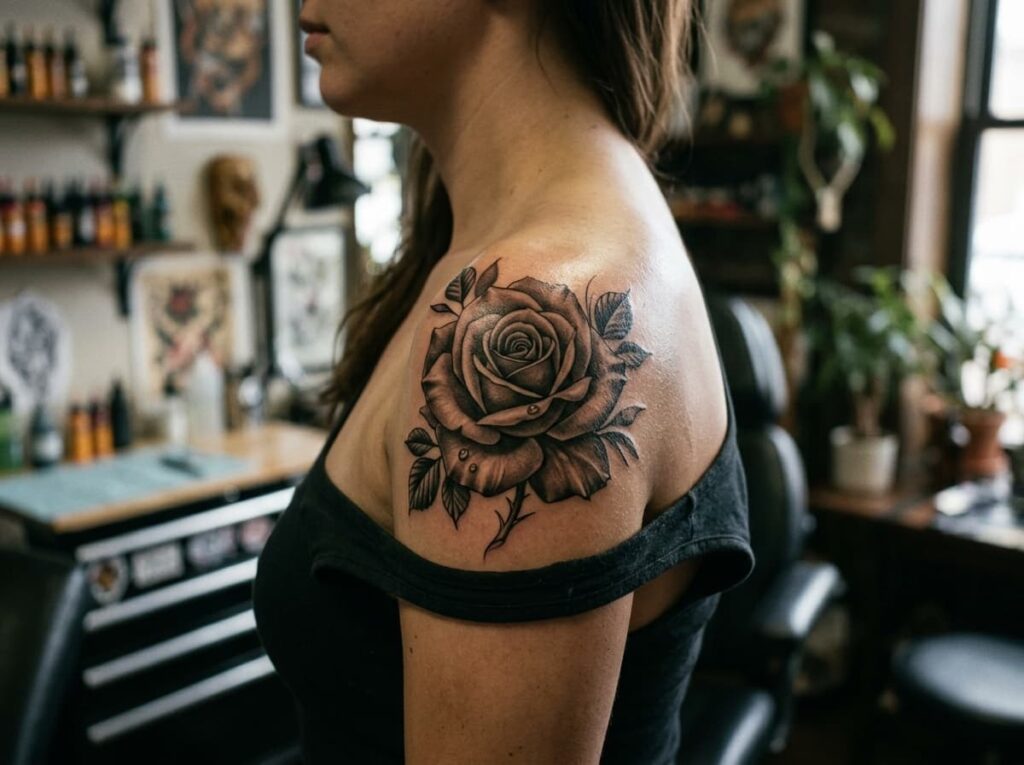
People assume black and grey means less detail than color work. It is the opposite.
Realism roses rely entirely on shading, so every petal fold and shadow has to be placed with more precision, not less. This style rewards patience in the chair, often across multiple sessions rather than one sitting.
Before you book, ask your artist for:
- Close up reference photos of real roses, not illustrations
- Examples of their shading work specifically, not just linework
The payoff is a rose that looks like it has actual weight and light falling on it.
4. Wilted Rose Tattoos That Turn Fading Beauty Into Meaning
A rose starts curling at the edges about a week after it’s cut, petals softening before they finally drop. That exact moment, caught in ink, is the whole point of this style.
Instead of a flower frozen at its best, a wilted rose shows something further along. People tend to choose it for reasons like:
- Marking the end of a hard year
- Getting through a breakup or loss
- A reminder that things do not have to stay perfect to still matter
Pair it with bare thorns and a few fallen petals below the stem for the full effect.
Questions to bring to your artist
5. Blue and Lavender Roses for a Color Twist on Tradition
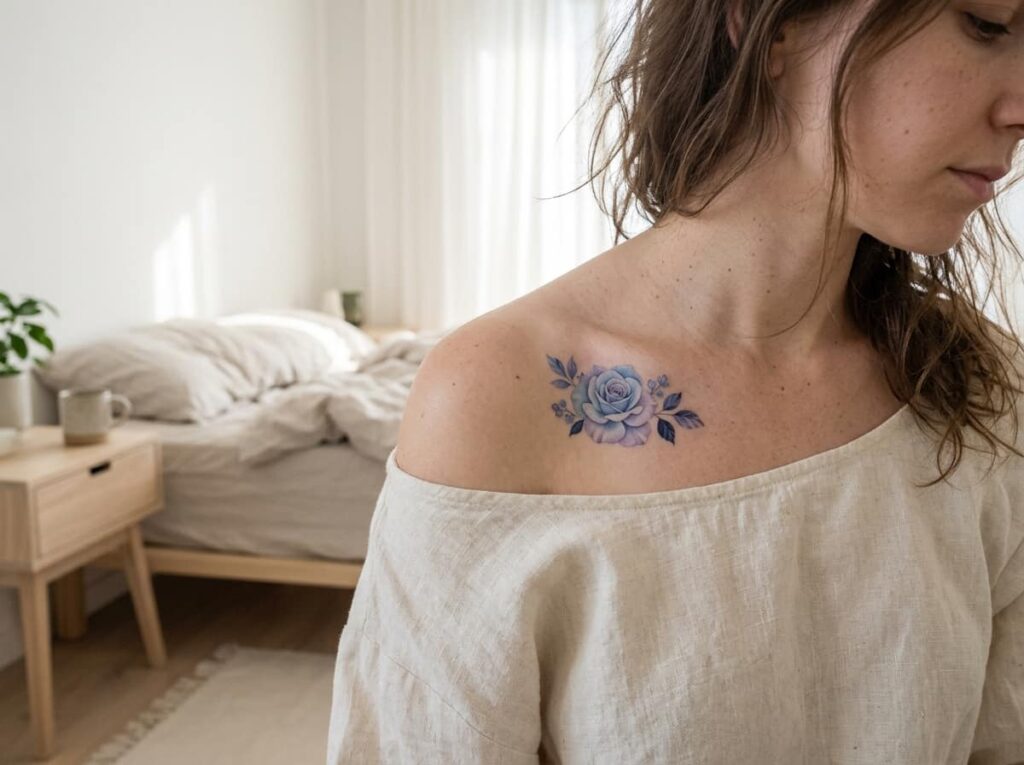
Red says passion. Blue and lavender say something quieter, more personal, less expected at a glance. Unnatural rose colors read as a deliberate choice rather than a default, which is part of the appeal.
Cooler tones age a little differently than warm reds too, since blue ink can shift subtly over the years instead of fading to a dull brick color. Before booking, look for:
- A portfolio with other blue or purple color work, not just black and grey
- Healed photos of color pieces, at least a year old
- A shop that mixes custom color rather than using one stock blue
Ask directly about their experience with cooler pigments, since not every artist works with them often.
Ask to see healed color work before booking.
Expect a slightly higher price for custom mixed ink.
Don’t assume every shop can do this well.
Don’t pick the color last minute in the chair.
6. Rose Skeleton Tattoos for an Edgy Anatomical Spin
A full bloom on one side, bare bone structure on the other. This split design treats the rose like an X-ray, showing petals fully formed on top and stripped down to stem and thorn underneath.
People get drawn to this one for its contrast more than anything else. It is not trying to be pretty in the usual sense, and that is kind of the point.
Getting the split right takes a specific approach:
- Pick a vertical or diagonal flower first so the design has a natural midline to split along
- Decide which half stays detailed and which half strips down to bare structure
- Keep the transition between the two halves sharp rather than blended, so the contrast actually reads
This design leans better on larger canvases like the forearm or thigh, where the detail has room to breathe.
Pick a flower angle with a clear vertical or diagonal line to split along.
Decide which side stays full bloom and which side goes bare.
Keep the line between the two halves crisp instead of blended.
7. Geometric Mandala Roses That Mix Structure With Softness
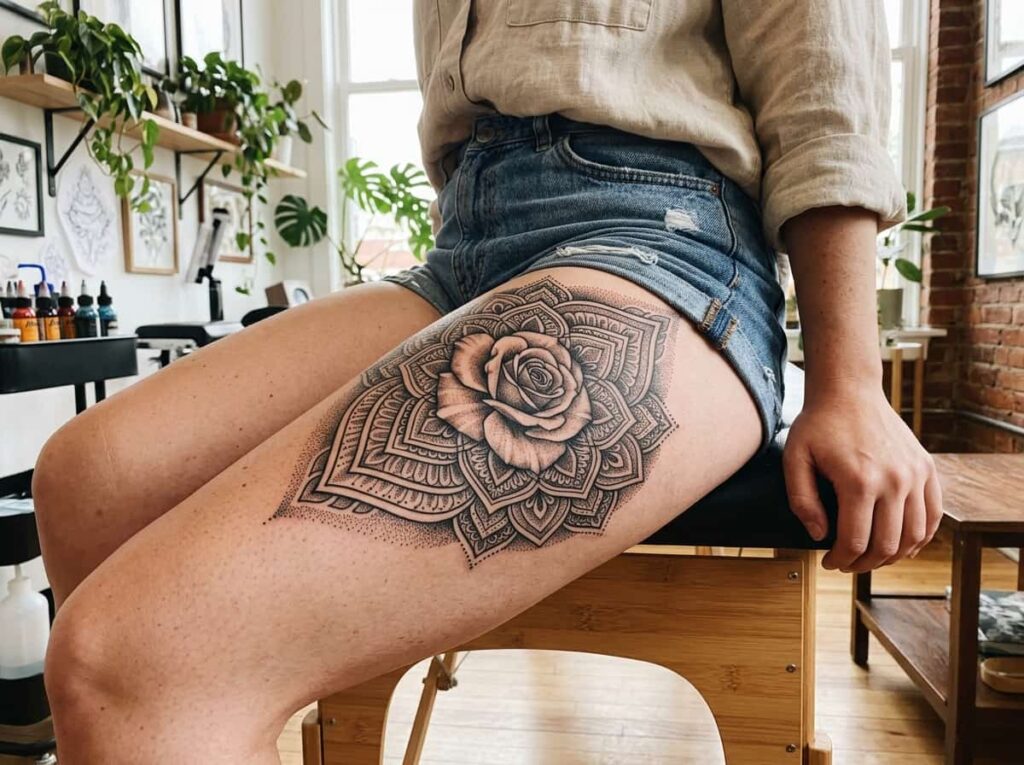
Mixing a rigid grid with something as soft as a rose shouldn’t work, but the tension between the two is exactly why it does. Straight lines and dot work frame the flower, while the petals themselves stay organic and curved inside that structure.
This style demands an artist who is precise with symmetry, since a mandala that is even slightly off center draws the eye immediately. Expect a longer consultation than most rose tattoos, since the geometric framework has to be planned out before the floral detail even starts.
The result holds up well over time. Dot work and straight lines age at a different rate than shading, so the structure stays sharp even as the softer rose detail mellows slightly with age.
A plain rose sketch with no sense of structure or framing around it.
A dot work mandala frame holding the rose in balanced, deliberate symmetry.
8. Scattered Mini Rose Clusters Instead of One Big Bloom
One big rose draws attention to a single spot. A handful of smaller roses, scattered loosely across a shoulder or down a spine, reads completely differently.
The scattered approach gives you more flexibility too, since you can add another small rose later without disrupting a finished centerpiece. It also tends to cost less per session, since each individual flower is simple.
| One Large Rose | Scattered Mini Roses |
|---|---|
| Fixed design, hard to expand later | Easy to add more flowers over time |
| One focal point draws the eye | Spreads visual interest across the area |
| Usually one longer session | Can be done in shorter, separate sittings |
Scattered clusters work especially well for people who are not sure they want to commit to one big placement right away.
| One Large Rose | Scattered Mini Roses |
|---|---|
| Fixed design, hard to expand later | Easy to add more flowers over time |
| One focal point draws the eye | Spreads visual interest across the area |
| Usually one longer session | Can be done in shorter, separate sittings |
9. Rose and Wildflower Bouquets for a Botanical Garden Feel
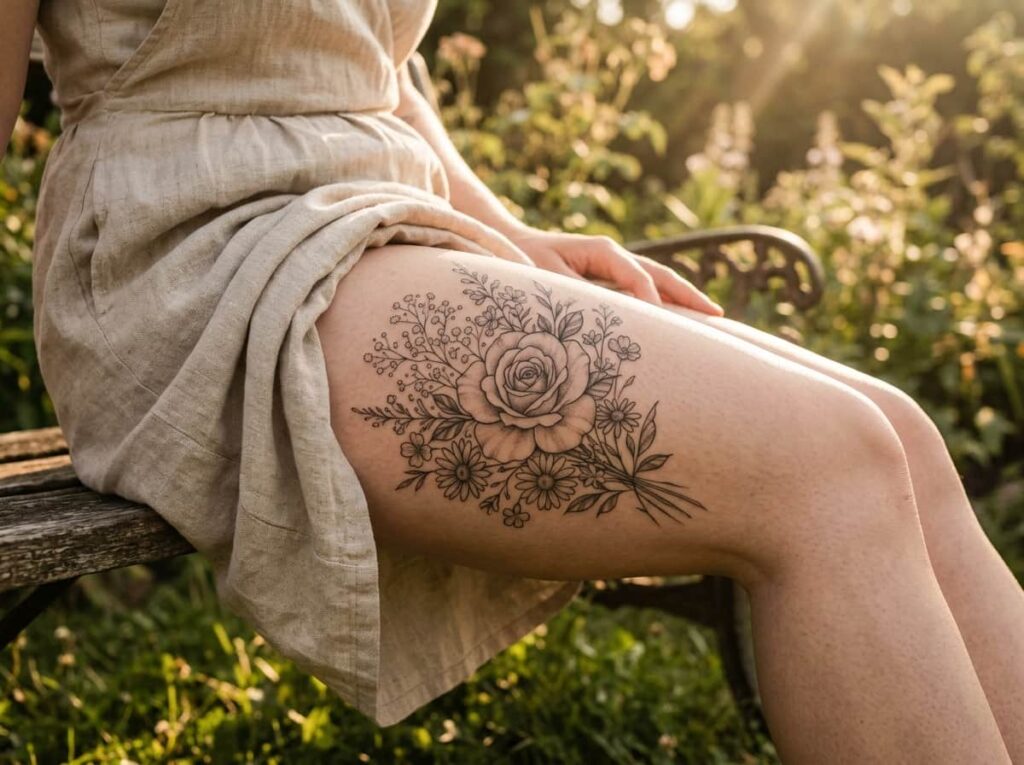
A rose on its own can feel a little stiff, almost formal. Surround it with loose wildflowers like baby’s breath, daisies, or lavender sprigs, and the whole thing loosens up into something that looks picked from an actual garden instead of staged.
This combination also gives you room to add personal meaning. A specific wildflower tied to a birth month, a place, or a person can sit right alongside the rose without the piece feeling cluttered.
Botanical bouquets photograph well for healing check ins too, which matters if you want to track how the colors settle.
10. Gothic Black Roses With Heavy Shading and Sharp Thorns
Most rose tattoos soften the thorns or leave them out entirely. Gothic black rose designs do the opposite, using heavy shading and exaggerated, sharp thorns as the actual focal point rather than an afterthought.
The look is bold and a little dramatic, built from deep solid black rather than the gradual shading used in realism work. It tends to hold up well over decades, since solid black ink fades slower than fine gradients.
This is a strong choice for a second or third tattoo, once you already know how your skin takes ink.
⚠️ Watch Out
Heavy black saturation takes longer to heal than linework. Expect more peeling and plan for a touch up if any spots heal patchy.
11. Roses Wrapped Around Script for a Personal Tribute
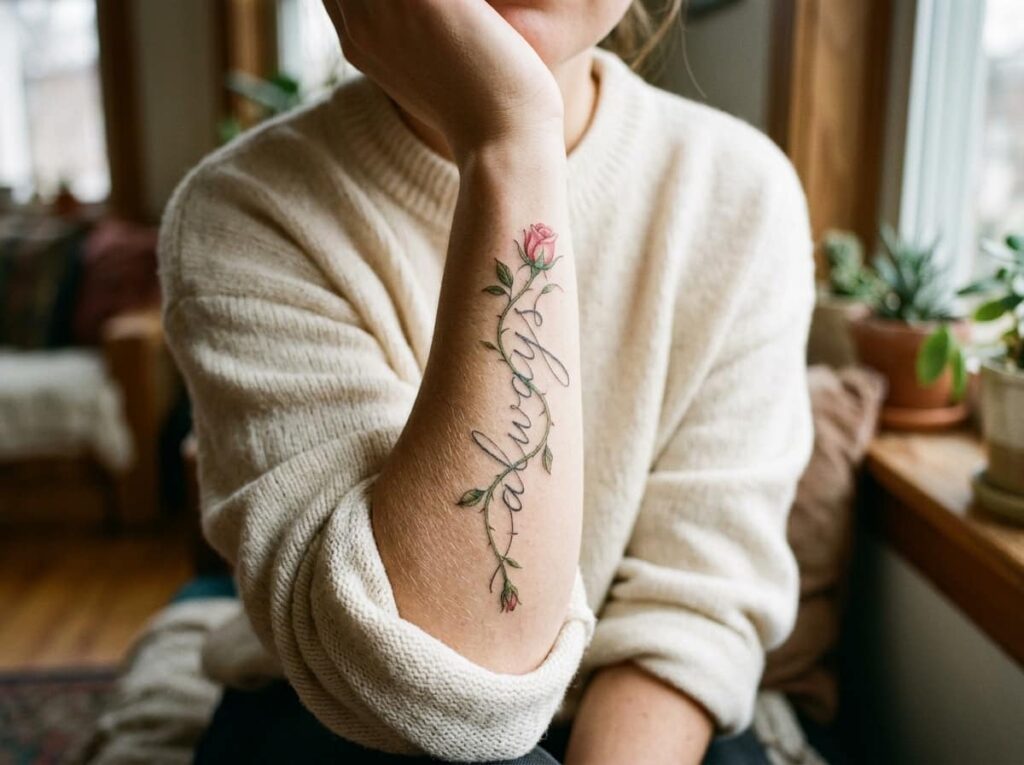
A name, a date, or a single word means more when it’s not just floating on its own. Wrapping a rose stem around the script, or letting thorns trail just below the letters, gives the words a frame instead of leaving them bare.
This combination works especially well for memorial pieces or tributes, where the flower softens what could otherwise feel like a plain line of text.
A few placement notes worth knowing before you sketch anything out:
- Longer phrases need a vertical placement like the spine or forearm to keep the lettering legible
- Script shrinks and blurs over time faster than bold linework, so keep font size generous
- Cursive scripts read better wrapped around a curved stem than block lettering does
Script fades and blurs faster than bold lines, so size the lettering generously from the start rather than fixing it later.
12. Roses in Unexpected Spots Like the Spine or Behind the Ear
Placement changes a tattoo as much as the design itself. The same small rose that looks delicate behind the ear would read completely differently stamped on a forearm.
A few spots worth considering if you want something that isn’t the first place people look:
- Behind the ear, for something only visible when hair is pulled back
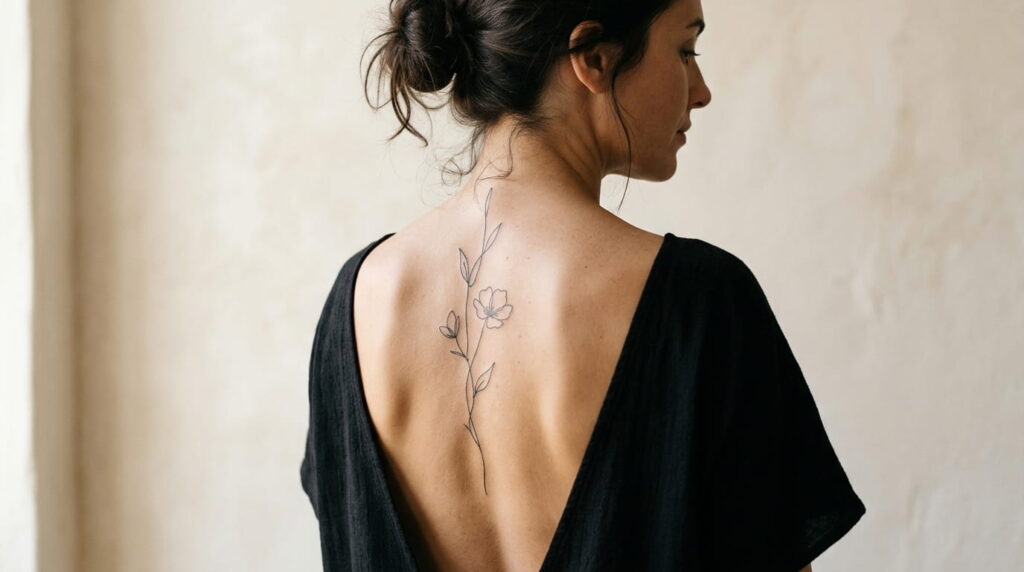
- Along the spine, where a vertical rose and stem follow the natural curve of the back
- The side of the ribcage, more private and often less painful than people expect for a small design
- The back of the neck, right at the hairline
Smaller, unexpected placements tend to heal faster too, simply because there is less surface area involved.
- ▸Behind the ear for something only visible with hair pulled back.
- ▸Along the spine, following its natural curve.
- ▸The side of the ribcage or the back of the neck at the hairline.
Conclusion
A rose doesn’t have to look like every other rose to still mean something. Wilted, scattered, wrapped in script, or stripped down to bare bone, each version carries its own kind of meaning depending on what you’re trying to say with it.
The twelve rose tattoo ideas for women above are starting points, not finished blueprints. Bring your favorites to a consultation, talk through placement and sizing with your artist, and let the details shift to fit your skin and your story.
Save this list for the next time you’re sketching out ideas before a tattoo appointment.
Leave a Reply