
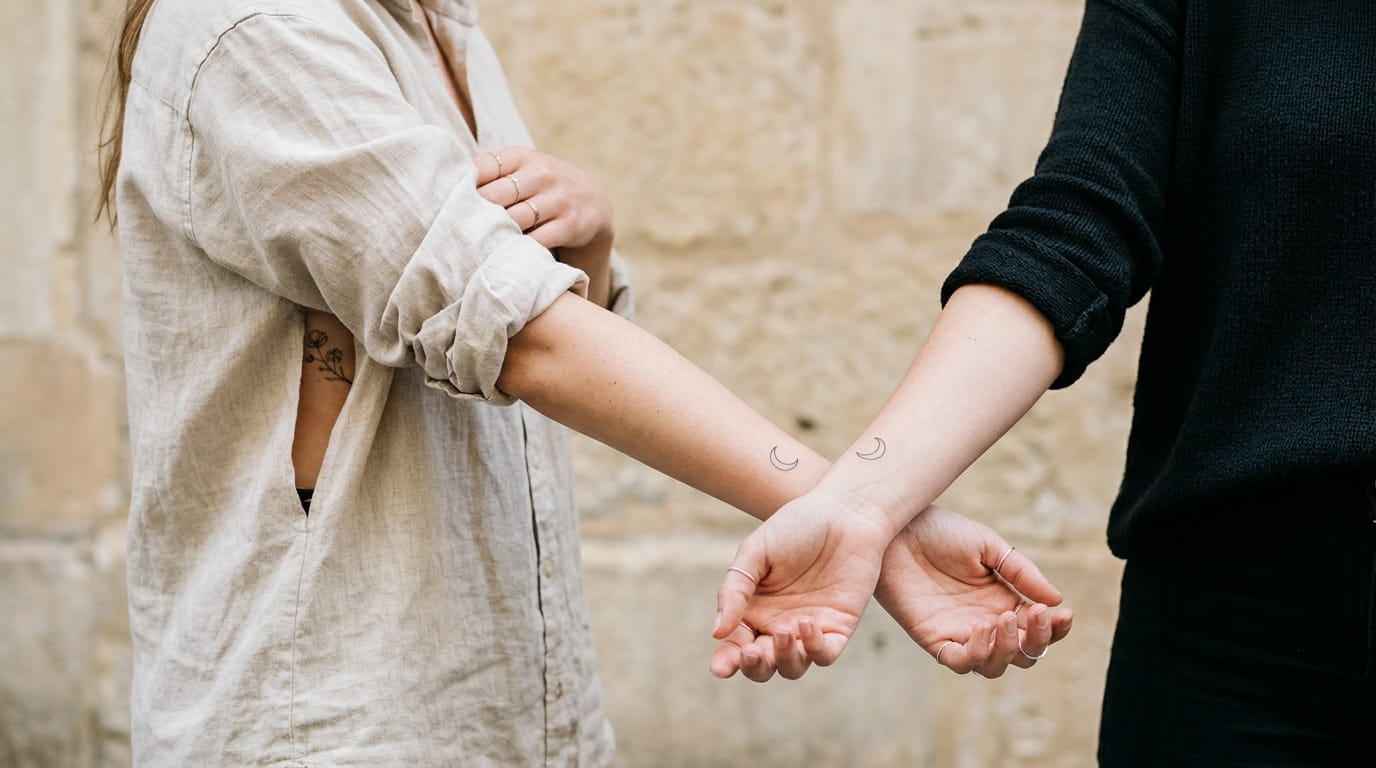
You and your person love the same design. Then one of you says “wrist” and the other says “ribs,” and suddenly a fun plan turns into a standoff.
It happens because the design is only half the choice. Where it goes changes how it looks, who sees it, how it heals, and whether it still feels like a pair. A great design in the wrong spot can feel off every time you glance down.
These matching tattoo placement ideas walk you through the decision step by step. You’ll compare same spot, mirror spot, and hidden placements, then work through the practical stuff: work dress codes, pain, size, sun, and what to do if one of you changes your mind.
Read it together if you can. Notice which options you both light up about. That’s your answer.
1. Decide What You Want the Pair to Say Before You Pick a Spot

Placement is a message, so choose the message first.
Same spot says “we’re a set.” Mirror spots say “we face each other.” A hidden spot says “this is just ours.” None of these is better, but they feel very different on the body.
- Ask each other: do we want strangers to notice the match?
- Ask: do we want to see each other’s tattoo, or only our own?
Write one sentence about what the pair means. Pick the spot that fits that sentence.
2. Put Both Tattoos on the Same Spot When You Want an Instant Match
Same spot is the easiest pair for other people to spot.
Two matching forearms, two matching ankles, two matching spots behind the ear. When you stand side by side, the match is obvious without a word. It also keeps the planning simple, since one stencil placement works for both of you.
It suits designs that read the same way on every body, like a small symbol, a word, or a simple outline.
Check that the spot works for both bodies, since a forearm and a wrist can differ in size.
💡 Quick Tip
Stand next to each other and hold your arms or legs up together before the stencil goes on. If the two placements look uneven in the mirror, nudge one by a finger width.
3. Choose Mirror Spots So Your Tattoos Face Each Other

Here’s a small twist that changes the whole feel: put them on opposite sides.
One of you wears the tattoo on the left wrist, the other on the right. Stand facing each other, and the two designs line up like a reflection. It works especially well for halves of a design, such as half a heart or a split moon, or for designs that point in a direction.
Decide which side each person wears before you book. Mirroring only works when you both remember who is who.
Both of you wear it on the left wrist. Matching, but the designs point the same way and never meet.
One on the left wrist, one on the right. Face each other and the two pieces line up like a reflection.
4. Hide One Tattoo Where Only You Two Know About It
Some matches are better kept private.
A hidden tattoo lives on a spot clothes cover easily: ribs, upper thigh, hip, the back of the shoulder, or the side of the foot. You get the meaning without the questions. It’s also an easy yes for anyone with a strict workplace or a family who might comment.
Hidden doesn’t have to mean identical. You can pair a visible tattoo for one person with a hidden one for the other.
| Visible spot | Hidden spot |
|---|---|
| Others notice the match | Only you two know |
| May draw questions at work | Easy to keep private |
| Gets more sun over time | Usually protected from sun |
| Easy to compare side by side | Harder to show off together |
5. Pick Wrists, Forearms or Ankles for Easy Side by Side Matching

When in doubt, choose a spot you can line up in two seconds.
Wrists, forearms, and ankles are easy to hold next to each other, easy to photograph, and easy to compare. They also suit small to medium designs, so the pair stays balanced.
Wrists are the most visible and the most popular. Forearms give you more room. Ankles are quieter and easy to cover with socks or pants.
Pick the spot that matches how visible you both want to be.
6. Use Ribs, Shoulders or Thighs for Larger Matching Designs
Bigger designs need bigger canvases, and these three spots have plenty of room.
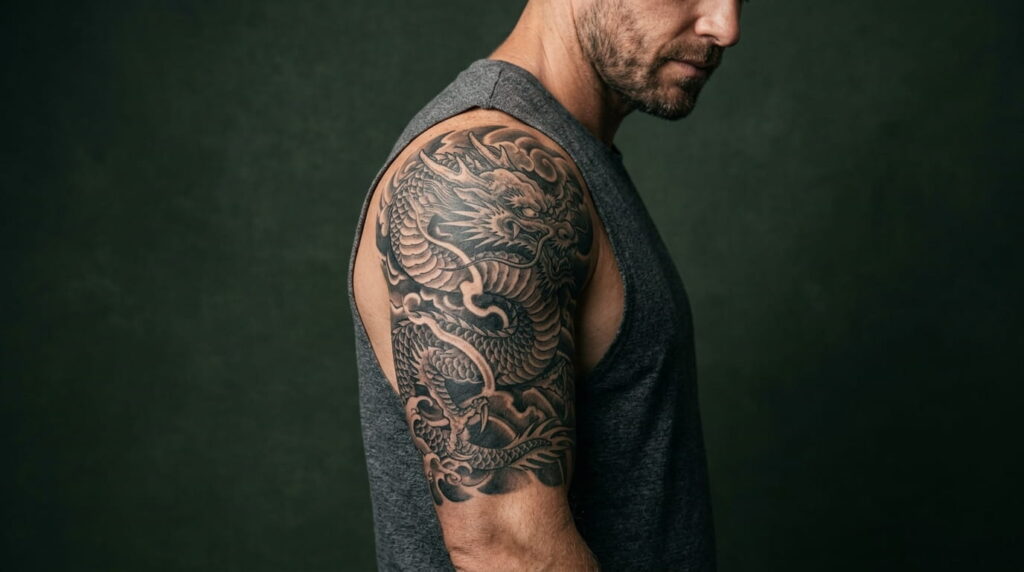
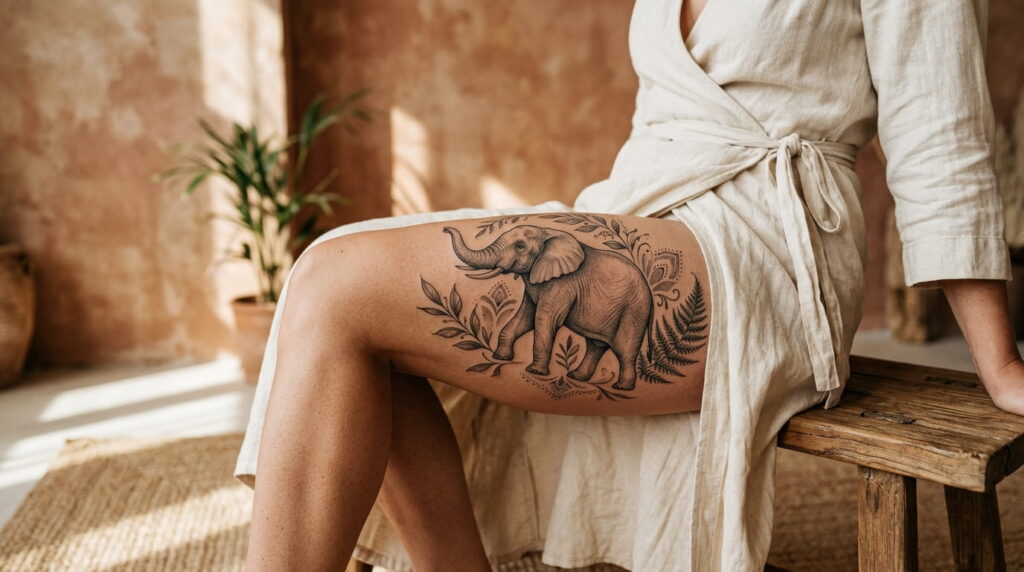
Ribs are narrow and long, so they suit tall designs like a branch, a line of text, or a slim flower. Shoulders and shoulder blades hold wide, rounded designs well. Thighs are the roomiest, which makes them a good fit for detailed pieces.
All three are easy to cover, which keeps the match private if you want it that way.
Ask your artist how the design will sit when you move, bend, and breathe. A shape that looks right standing still can twist on a ribcage.
Check before going bigger
7. Plan Around Your Work Dress Code Before You Book

A tattoo can be a small decision and still affect Monday morning.
Some workplaces don’t mind visible tattoos. Others ask you to cover them, and a few have firm rules. Read your employee handbook, or ask someone in HR a general question, before you pick a spot like a hand, neck, or forearm.
If your jobs differ, one of you may need a hidden spot while the other is free to choose. That’s fine. Matching doesn’t require identical placement.
Think about the jobs you might want later, not only the one you have now.
Read the dress code or ask HR a general question.
Pick a spot a sleeve or sock can cover.
Guessing what your workplace allows.
Choosing hands or neck without checking first.
8. Compare Pain Levels Together Before You Choose a Spot
Ask each other honestly how much discomfort you’re up for.
Spots with thin skin or little padding, like ribs, ankles, feet, and inner arms, are often described as more sensitive. Fleshier spots, like the outer thigh or upper arm, are often described as easier. Everyone feels it differently, so one person’s easy spot can be another person’s hard one.
If your tolerance is different, choose spots that suit each of you. The tattoos can still match.
⚠️ Watch Out
Don’t pick a spot just to look tough for your partner. Ask your artist how the area tends to feel, and tell them if you want to take breaks.
9. Test Placement With a Temporary Tattoo or Marker First

Wear it for a day before you wear it for life.
Draw the design on both of you with a skin safe marker, or order a temporary tattoo in the right size. Then go about your day. Check the mirror, sit down, reach for things, and see how the design moves.
You’ll learn fast. Maybe it disappears under a watch strap. Maybe it looks too big in the shower. Maybe you keep glancing at it and smiling.
Send each other a photo that evening.
A day of wearing a fake tattoo teaches you more than an hour of looking at pictures.
10. Match Size to the Body Spot so Both Pieces Look Balanced
Two tattoos can be the same design and still look unequal.
A wrist and a forearm hold different sizes. Bodies differ too, so a piece that fits one person neatly can look tiny on another. The goal is balance, not identical measurements.
Settle the size together, then let your artist adjust each stencil to its spot.
Cut a paper shape of the design in your chosen size, then tape it to each of you.
Stand in front of a mirror and check whether both pieces look proportionate.
Trim or grow the paper until it feels right on both bodies, then give your artist those measurements.
11. Think About Sun, Stretch and Healing When You Choose the Spot

Where a tattoo lives decides how it ages.
Spots that see a lot of daylight, like wrists, hands, and forearms, tend to need more sun protection over the years. Spots that stretch or fold, like elbows, knees, and ribs, can be trickier to heal and may blur at the edges if the design is too fine. Spots that rub on clothing, like the waistband or bra line, can feel irritated while they heal.
Ask your artist where your chosen spot tends to give people trouble, and plan your aftercare around it.
12. Agree on a Plan for What Happens If One of You Backs Out
Say the awkward part out loud now, so it never gets awkward later.
Life changes. Someone gets nervous, a job shifts, a friendship hits a rough patch. If you’ve already booked, decide ahead of time what happens. Maybe the other person still gets theirs as a solo piece. Maybe you wait. Maybe you cancel together.
Also talk about the longer view. A matching tattoo can outlast the moment that inspired it, so pick a design and a spot you’d both be okay with if things change.
A kind plan made early protects the relationship.
Agree on these before you book
The Conclusion
The best matching tattoo placement ideas start with a simple question: what do you want the pair to say? Same spot says you’re a set. Mirror spots say you face each other. A hidden spot keeps it just between the two of you.
Check your work rules, compare comfort levels, and test the design with a marker before anything permanent happens. Then agree on a kind plan in case one of you changes your mind.
A matching tattoo works best when both people feel good about where it lives, not just what it looks like.
Choose the message, test the spot, and agree on a plan before the stencil goes on.




Leave a Reply